



The most emotional question that is always raised by parents and teachers all over the world is, what is the best age to learn Quran?
The issue of this question is genuine. It is the wish of every parent to see his/her child develop with a good spiritual background but at the same time to make the journey an experience which should be natural, comforting, and meaningful.
It does not apply to all children, as there is no age that fits, but there are some stages of growth that can provide some direction. Learning Quran can give life long guidance and tranquility when handled with patience, gentleness and understanding.
Why Age Matters – and Why It Isn’t Everything
Children learn differently as they grow.
Some begin speaking early and enjoy repeating verses.
Others learn more slowly but connect deeply once they are ready.
It is not speed that is important, but is love, understanding, and constant.
Once a child begins learning at an age that is conducive to his/her emotional and cognitive growth, he/she develops:
- a healthier relationship with the Quran,
- stronger memory,
- better pronunciation,
- and a sense of joy whenever they recite.
So while we look at age ranges, we also respect individual differences.
A Developmental Journey: What Each Stage Brings
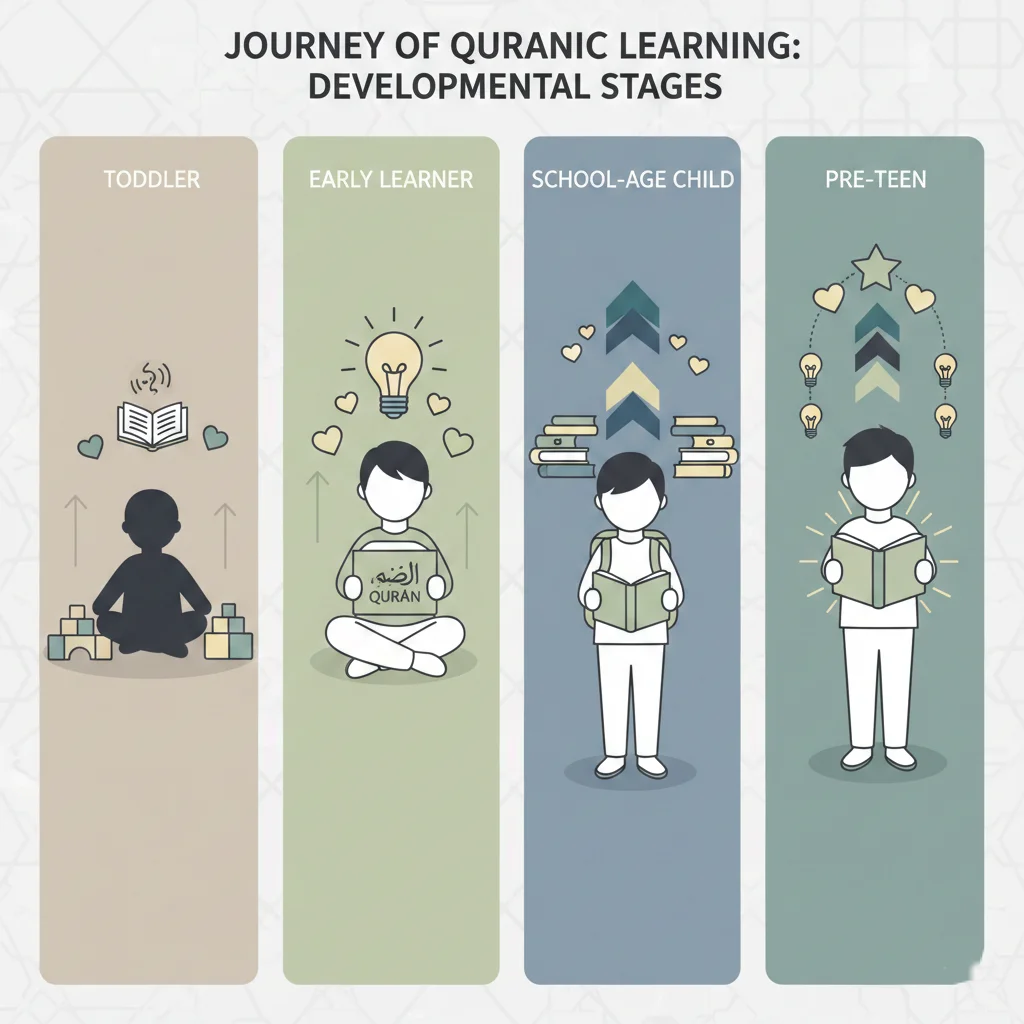
Early Childhood (0–2 years): Gentle Exposure
At this age, formal learning isn’t needed.
But a child absorbs the sounds, rhythm, and calmness of recitation.
What helps:
- playing soft recitation at home,
- reciting around the child naturally,
- using soothing verses during bedtime.
The goal is simple: create a peaceful association.
Toddlers (2-4 years): Curiosity and Imitation
Children begin copying words and showing interest in sounds.
This is the perfect time to introduce light, enjoyable activities.
Helpful approaches:
- story-based lessons,
- simple duas,
- very short surahs paired with gentle explanations,
- colorful visuals or gestures.
The aim isn’t memorization – it’s sparked curiosity.
Early Learners (4-6 years): Strong Memory Window
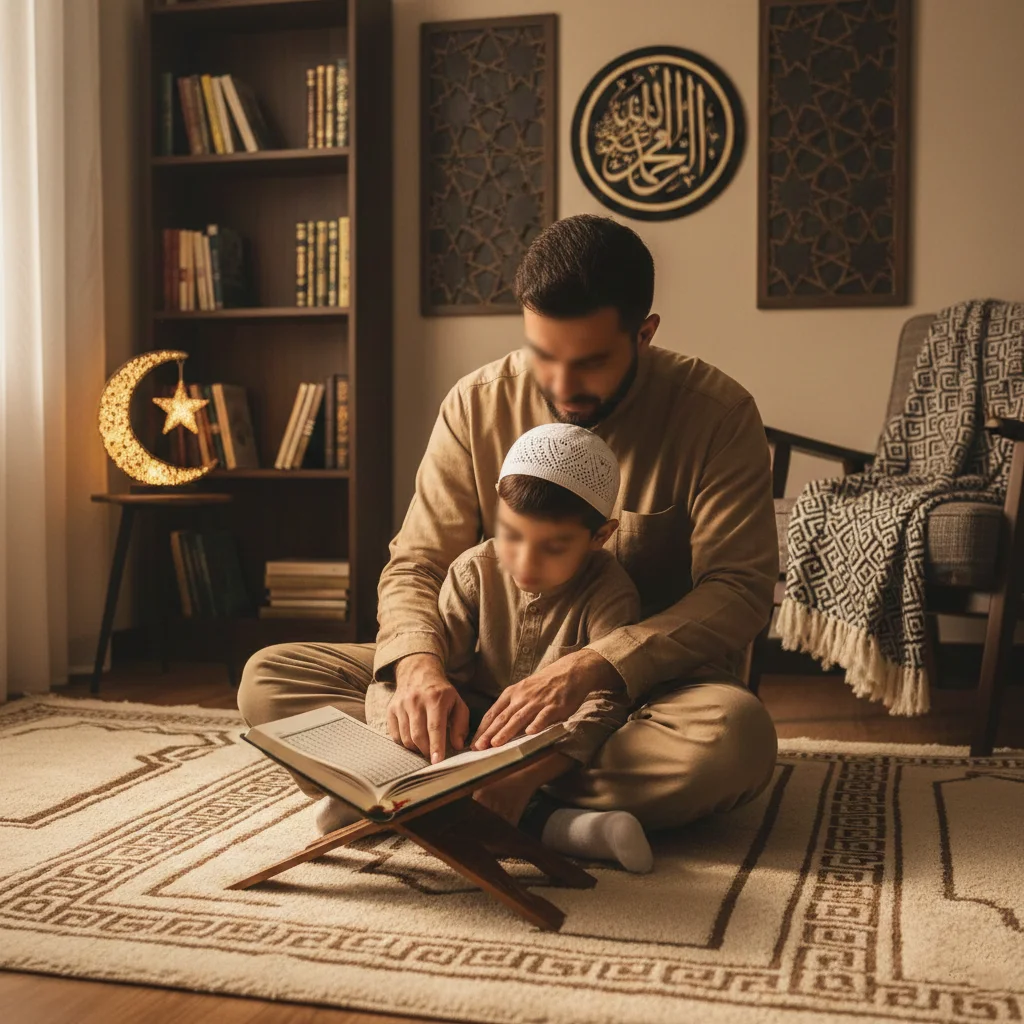
This age is widely considered the most effective period to begin structured learning, as children:
- imitate clearly,
- enjoy routine,
- have a growing attention span,
- and respond beautifully to positive reinforcement.
What works well:
- short memorization sessions,
- repetition in small pieces,
- basic pronunciation guidance,
- connecting each surah with a simple meaning or story.
This is the stage where many children take their first confident steps into Quran learning.
Ages 6-9: Understanding and Stability
This stage supports deeper learning. Children can:
- understand stories,
- follow rules,
- grasp basic tajwīd,
- and handle slightly longer lessons.
It’s ideal for:
- introducing tafsir suitable for kids,
- asking reflection questions,
- helping them link verses with real life,
- group recitation or class-based learning.
This age bridges memorization with meaning.
Ages 9-12: Structure, Discipline, and Reflection
Children become more emotionally aware and socially conscious.
They handle structured lessons better and can set small personal goals.
This stage supports:
- steady memorization,
- stronger tajwīd practice,
- understanding themes and lessons in surahs,
- connecting teachings with daily behavior.
Here, learning becomes a personal responsibility, not only parental encouragement.
Teens and Adults: Never Too Late
Some begin learning later in life – and excel.
Older learners bring maturity, intention, and deeper reflection.
They often progress quickly because they choose to learn with purpose.
So… What Is the “Best Age to Learn the Quran”?
Based on developmental understanding and global teaching experience:
- The most effective window for beginning structured Quran learning is between 4 and 7 years of age.
But the true solution is kinder;
- The most appropriate age is the age where a child is safe, supported and capable of learning happily.
A child that begins at 6 with passion can make much more progress than a child who has been forced at 3 with no preparation.
Readiness > Age.
How to Know When a Child Is Ready
Look for these signs:
- interest in recitation
- ability to focus for a few minutes
- enjoyment in repeating words
- emotional comfort
- willingness to learn without pressure
If these signs appear, you can begin more structured lessons.
Principles That Lead to Successful Learning
- Keep sessions short and meaningful
Quality always outweighs quantity. Five minutes of engaged learning is better than a forced 30-minute session. - Connect memorization with understanding
Even one sentence of explanation helps a child see the Quran as guidance, not just sound. - Use stories – children remember stories more than rules
Stories make verses come alive. They help children understand the wisdom behind the words. - Encourage, don’t correct harshly
A child must feel safe to make mistakes. Gentle correction builds confidence. - Create a loving environment around the Quran
If home feels calm, kind, and encouraging, the child will naturally grow attached to the Quran.
Common Concerns Parents Have
- “My child struggles to pronounce correctly.”
This is normal. Focus on slow, repeated listening. Professional guidance helps, but patience matters most. - “Is memorization necessary at an early age?”
Memorization should never replace understanding. Both should grow together. - “Does starting late put a child at a disadvantage?”
Not at all. Many children – and adults – begin later and build a deep, lasting connection.
Simple Daily Routine for Young Learners (5–10 minutes)
- Listen to a short recitation.
- Repeat one small part together.
- Share one simple meaning or lesson.
- End with praise and dua.
Consistency is more powerful than long lessons.
Conclusion
The acquisition of the Quran is not a competition.
It is a life long process that is guided by small start, constant mentorship and emotional attachment.
Even though the best stage to develop is between the age of 4-7 years, every child takes its own time.
It is the best to ensure that a conducive environment is created where the Quran would become a place of solace, inspiration and love.
When the learning process starts well-intentioned and kind the blessings remain with the child forever.