



The online Quran academy combines verified Ijazah-certified teachers, a structured curriculum, child-safe one-to-one classes, regular progress tracking, and open parent communication. These qualities help children develop correct Quran recitation, strong Tajweed, and lasting confidence while learning the Quran with accuracy and respect.
Introduction
Your child begins reading the Quran with excitement. A few months later, you notice something worrying. Certain Arabic letters sound incorrect, and the teacher rarely explains Makhraj or corrects mistakes. As a parent, one question naturally comes to mind: Will these habits become permanent?
That concern is shared by many Muslim families searching for a reliable online Quran academy in the USA, UK, Canada, Pakistan and Australia. Learning the Quran is not like learning any other subject. Correct pronunciation, proper Tajweed, and qualified guidance matter from the very first lesson.
A trustworthy academy does more than schedule online classes. It provides experienced teachers, a structured learning system, regular assessments, and a safe environment where children grow in both knowledge and confidence. Choosing carefully today can help your child build a lifelong relationship with the Quran.
Who This Guide Is For
This guide is designed for:
- Muslim parents choosing Quran classes for children aged 5–12.
- Families comparing several online Quran academies before enrolling.
- Parents who want qualified teachers with authentic Islamic credentials.
- Anyone looking for a structured and child-friendly Quran learning experience.
Why the Best Online Quran Academy Starts with Qualified Teachers
Many parents compare prices, class timings, and websites first. Those factors matter, but they should never come before teacher qualifications.
Children naturally imitate the person teaching them. If pronunciation errors are not corrected early, those mistakes can become difficult to change later. Experienced Quran teachers regularly observe that students who skip Noorani Qaida or receive limited Makhraj correction often need extra months of revision.
A quality academy should therefore focus on:
- Correct Arabic pronunciation from the beginning.
- Step-by-step Tajweed instruction.
- Age-appropriate teaching methods.
- Continuous assessment instead of random lessons.
- Clear communication with parents.
When these foundations are in place, children usually progress with greater confidence and consistency.
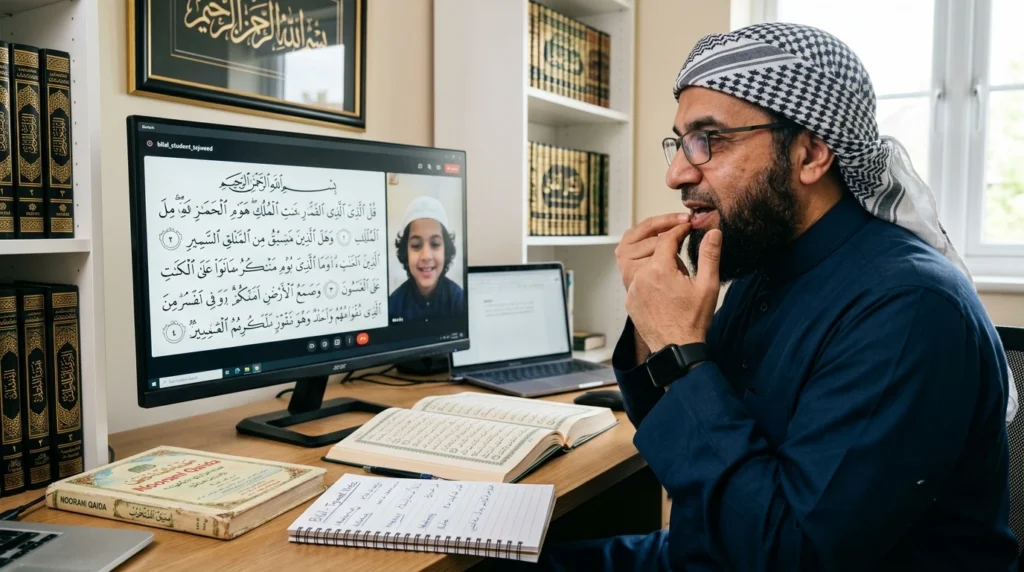
Sign 1 – Verified Ijazah-Certified Teachers Instead of Marketing Claims
Many academies describe their instructors as “qualified” or “experienced.” Those descriptions sound reassuring, but parents deserve more than general statements.
A teacher should be able to demonstrate recognized Islamic education and formal authorization to teach the Quran.
An Ijazah is a traditional certification granted by qualified scholars after a student demonstrates mastery of Quran recitation. It represents a trusted chain of learning that has been preserved throughout Islamic history.
When speaking with an academy, ask practical questions:
- Does the teacher hold an Ijazah?
- Which Islamic institution did they graduate from?
- Do they specialize in Tajweed or Hifz?
- How many years have they taught children?
For example:
- Sadiq ur Rehman completed Dars-e-Nizami at Jamia Faridia Islamabad and specializes in Tajweed with Qirat-e-Sabah certification. He has more than three years of teaching experience.
- Waseem Abbas graduated from Jamia Darul Tafseer wal Hadees and specializes in Hifz instruction with over four years of teaching experience.
Knowing these qualifications helps parents place their trust in verified expertise rather than advertising language.
Sign 2 – A Structured Learning System Instead of Random Lessons
One of the clearest signs of quality is a curriculum that follows a logical sequence.
Without a structured plan, children may memorize Surahs before mastering letter pronunciation or move into advanced Tajweed before developing confidence with basic recitation.
The Al Hamd Quran Learning System prevents these gaps through carefully planned stages.
Every student begins with:
- Initial learning assessment.
- Evaluation of Arabic letter recognition.
- Makhraj assessment.
- Tajweed level assessment.
Lessons then progress through:
- Noorani Qaida (when required)
- Correct pronunciation practice
- Guided Quran reading
- Tajweed application
- Hifz memorization pathway
- Tafseer and Islamic Studies at appropriate levels
Teachers also adjust lesson speed according to the student’s ability.
Sign 3 – Child-Safe One-to-One Learning with Respectful Islamic Guidance
Parents are trusting someone to teach their child the words of Allah. That responsibility requires professionalism, patience, and strong Islamic character.
A reliable academy creates a learning environment where children feel comfortable asking questions while maintaining proper Islamic etiquette.
Look for features such as:
- Individual live classes.
- Respectful teacher-student communication.
- Parent-friendly lesson monitoring.
- Age-appropriate teaching methods.
- Female teachers available when preferred for sisters and young children.
Experienced instructors understand that children learn differently.
Some students respond well to visual repetition. Others improve through guided recitation and immediate correction. Skilled teachers adapt their teaching style while keeping Quran recitation accurate.
When making a Quran academy comparison, focus on measurable teaching quality rather than attractive website design or promotional offers.
Every child learns differently, which is why a trial lesson matters. A free trial class at Al Hamd Islamic Center lets your family experience the teaching style, meet a verified Ijazah-certified instructor, and receive a personalized assessment before making any commitment. It is a simple, risk-free way to choose with confidence.
Sign 4 – Regular Progress Tracking Shows Real Learning
A child may attend every class on time, yet still struggle if no one measures progress. The reliable Quran learning providers do not rely on attendance alone. They use regular assessments to confirm that each student is improving.
Progress tracking should include:
- Makhraj evaluations
- Tajweed accuracy checks
- Quran reading fluency
- Hifz revision targets
- Monthly parent updates
- Individual learning goals
Teachers often notice that children improve faster when parents understand what to revise between lessons. Even few minutes of daily practice can strengthen confidence and consistency.
Sign 5 – Flexible Scheduling That Supports Family Life
A quality academy understands that Muslim families have busy routines. School, homework, sports, and family commitments all compete for time.
Instead of expecting families to adjust everything around classes, the academy should offer flexible scheduling that encourages long-term consistency.
Look for:
- Multiple class times
- Weekend availability
- Easy rescheduling
- Teachers familiar with different time zones
- Consistent weekly routines
Children usually learn better when Quran lessons become a regular part of their weekly schedule rather than an occasional activity.
Sign 6 – Honest Reviews and a Proven Reputation
Reading a Quran classes review is useful, but parents should look beyond ratings alone.
A trustworthy review often mentions specific learning outcomes instead of general praise.
Look for comments about:
- Improved Tajweed
- Better Quran confidence
- Helpful teacher feedback
- Consistent attendance
- Positive communication with parents
Reliable academies also explain their curriculum, teacher qualifications, and teaching methods openly. Transparency is often a stronger trust signal than marketing language.
Sign 7 – Clear Communication Before Enrolment
Parents should never feel uncertain about how their child will learn.
Before enrolling, a quality academy explains:
- How the first lesson works
- Which curriculum will be used
- How teachers assess progress
- What parents can expect
- How questions will be answered
Clear communication creates trust from the beginning and helps families make informed decisions.
Online Quran Academy Checklist
When deciding how to choose an online Quran academy, use this practical checklist.
✔ Teachers hold verified Ijazah or recognized Islamic qualifications.
✔ The curriculum follows a structured learning pathway.
✔ Noorani Qaida is taught when needed.
✔ Tajweed is corrected in every lesson.
✔ Makhraj receives individual attention.
✔ Progress reports are shared with parents.
✔ Lessons are one-to-one.
✔ Child safety policies are clearly explained.
✔ Flexible scheduling is available.
✔ A free trial class is offered.
This online Quran academy checklist makes it easier to compare academies using meaningful standards instead of advertising claims.
Common Mistakes Parents Should Avoid
Many families choose an academy with good intentions but overlook important details.
Choosing Only by Price
Affordable classes are helpful, but the lowest price should never replace qualified instruction.
Ignoring Teacher Credentials
Always ask where the teacher studied and whether they hold an Ijazah.
Skipping the Trial Class
A live lesson reveals far more than a website or brochure.
Overlooking Progress Reports
Without regular feedback, parents cannot clearly measure improvement.
Rushing Past Noorani Qaida
Experienced teachers frequently observe that students who skip Noorani Qaida often require additional time correcting pronunciation later. Building a strong foundation saves time in the long run.
What Parents Notice After Choosing a High-Quality Quran Academy
Children rarely become confident readers overnight, but steady improvement becomes noticeable when learning follows a structured plan.
Parents often report:
- Clearer Arabic pronunciation
- Better Tajweed application
- Greater confidence while reciting
- Increased enthusiasm for Quran lessons
- Improved memorisation habits
- More consistent daily practice
Many children also become more comfortable reciting aloud because they know their teacher has corrected mistakes early rather than allowing them to continue.
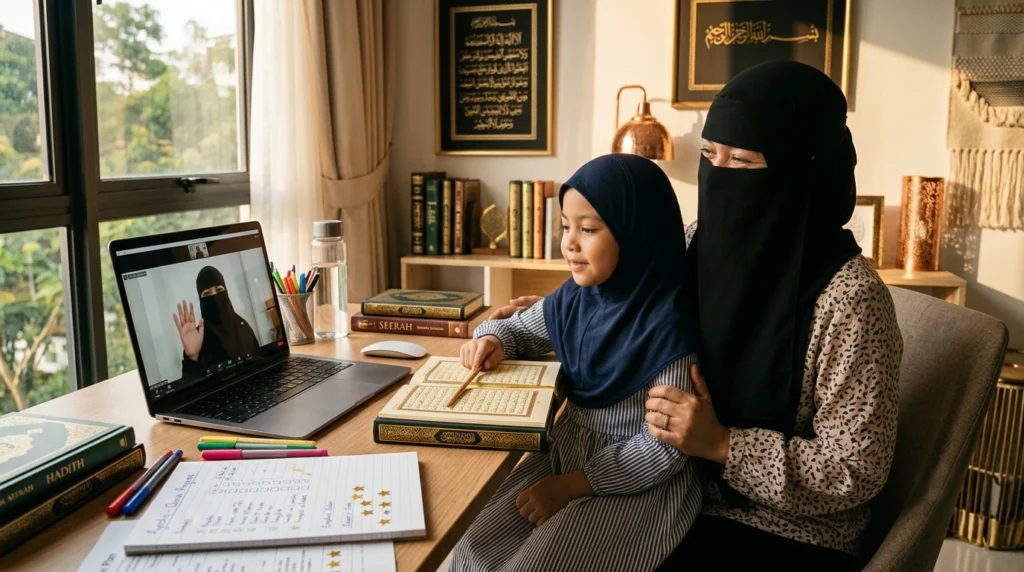
Why Al Hamd Islamic Center Earns Parents’ Trust
Choosing a Quran academy is ultimately about trust. Parents want to know that the person teaching their child has the knowledge, experience, and character to guide them correctly.
Al Hamd Islamic Center serves Muslim families across the USA, UK, Canada, Australia, and Pakistan through a structured approach built on authentic Islamic scholarship.
Verified Teacher Credentials
The academy includes more than 200 Ijazah-certified teachers with recognized Islamic qualifications.
Examples include:
- Sadiq ur Rehman – Dars-e-Nizami graduate from Jamia Faridia Islamabad, Qirat-e-Sabah specialist, and experienced Tajweed instructor.
- Waseem Abbas – Graduate of Jamia Darul Tafseer wal Hadees with expertise in Hifz education.
- Komal Kiani – Certified through the Tanzeem ul Madaris Board with training in Tajweed and Tafseer.
- Sidra Zulfiqar – Holds Double Master’s degrees in Arabic and Islamic Studies from Jamia Zia-ul-Uloom.
These qualifications give parents clear evidence of the academic background behind each lesson.
Teaching Methodology
The Al Hamd Quran Learning System includes:
- Initial student assessment
- Personalised learning plans
- Daily Makhraj correction
- Step-by-step Tajweed instruction
- Guided Quran recitation
- Scheduled Hifz revision
- Regular parent feedback
- Continuous learning assessments
This structured approach helps students build strong foundations before progressing to advanced learning.
Child Safety
Lessons take place in a respectful Islamic environment with professional teacher supervision and clear communication with parents.
Progress Tracking
Teachers provide regular updates, helping parents understand what their child has achieved and which skills need further practice.
Risk-Free Start
Every family may begin with a free trial class. This gives parents an opportunity to observe the teacher, ask questions, and evaluate the learning experience before making any commitment.
How do you choose an online Quran academy?
Select an academy with verified teacher qualifications, structured Quran lessons, regular progress tracking, child-safe one-to-one instruction, and a free trial class. These features help parents evaluate teaching quality before making a long-term decision.
Frequently Asked Questions
The best online Quran academy combines qualified Ijazah-certified teachers, a structured curriculum, regular Tajweed correction, child-safe one-to-one classes, and consistent progress tracking. Parents should also look for transparent teacher credentials, clear communication, and a free trial lesson before making a final decision.
Ask where the teacher studied, whether they hold an Ijazah, and what areas they specialize in, such as Tajweed or Hifz. Reputable academies openly share teacher credentials, Islamic educational backgrounds, and teaching experience instead of making general claims about being “qualified.”
Yes. Children often learn very well through one-to-one online lessons when classes follow a structured curriculum. Regular Makhraj correction, consistent practice, parent involvement, and an experienced teacher all contribute to steady improvement in Quran reading and Tajweed.
Ijazah is a traditional authorization that confirms a teacher has mastered Quran recitation under qualified scholars and has permission to teach others. For parents, it provides confidence that their child is learning the Quran according to authentic and established Islamic standards.
Ask about teacher qualifications, lesson structure, progress reports, child safety, class scheduling, teaching methodology, and whether a free trial lesson is available. These questions help you compare academies based on quality rather than marketing claims.
Conclusion
Choosing the best online Quran academy is about protecting your child’s relationship with the Quran from the very beginning. Qualified teachers, accurate Tajweed, careful Makhraj correction, structured lessons, and regular progress reviews all work together to build strong lifelong habits.
If your greatest concern is, “I don’t want my child to learn incorrectly,” you are asking the right question. Early mistakes can become difficult to correct, while proper guidance creates confidence that lasts for years.
Take time to compare academies carefully. Ask about teacher qualifications, observe a lesson, and choose a learning environment that values both Islamic scholarship and compassionate teaching.