



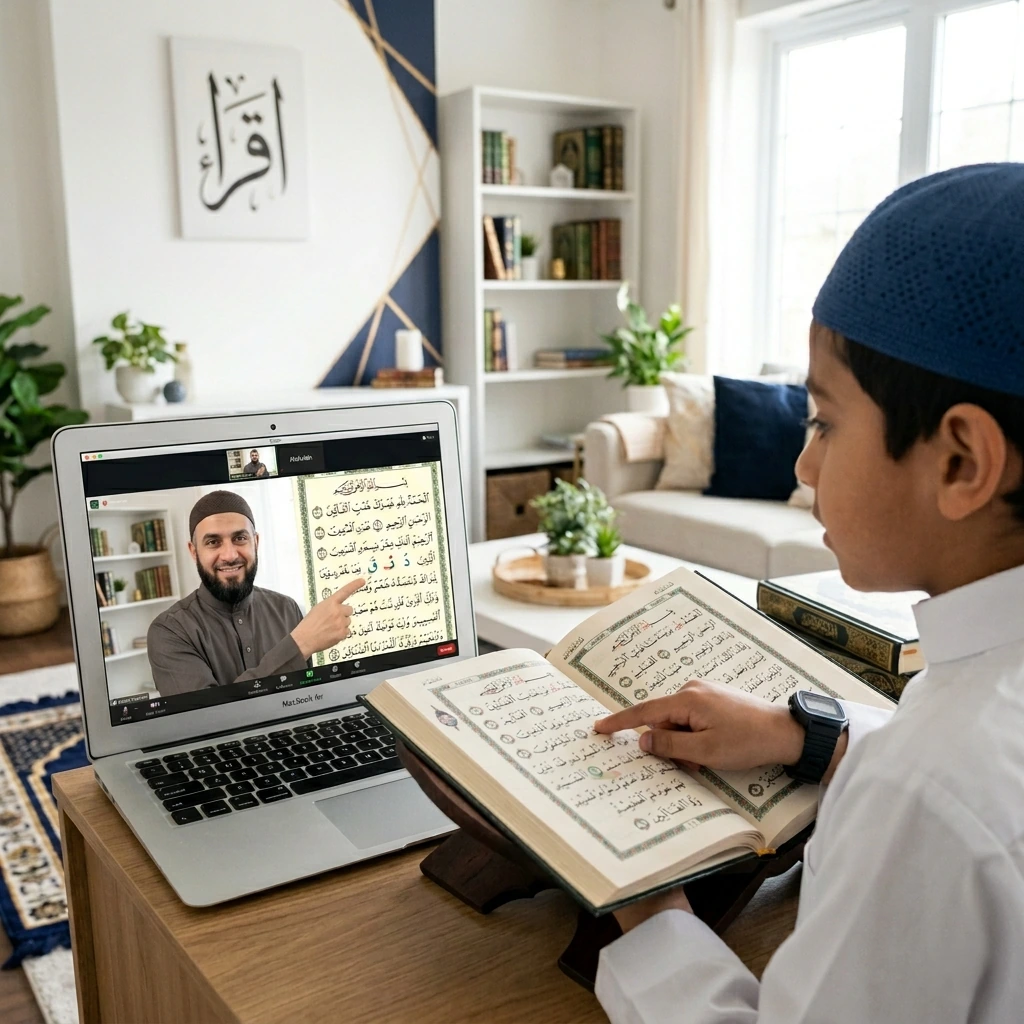
Choosing the right Quran teacher is one of the most important decisions for your child’s Islamic education. If you’d like to see how a teacher interacts with your child before enrolling, Al Hamd Islamic Center offers a free trial class with no obligation, so you can make your decision with confidence.
A qualified Quran teacher has authentic Islamic education, strong Tajweed knowledge, verified credentials such as an Ijazah or recognized Islamic qualification, teaching experience, and excellent character. They teach correct Quran recitation step by step, helping students develop accurate pronunciation, confidence, and a lifelong connection with the Quran.
Many Muslim parents quietly share the same concern: “What if my child learns the Quran incorrectly and develops habits that are difficult to correct later?”
That fear is understandable. A mistake in Makhraj or Tajweed may seem small at first, but repeated practice can turn it into a lasting habit. Correcting those mistakes often takes much more time than learning correctly from the beginning.
The encouraging news is that you do not need to rely on guesswork. Once you know which qualifications matter most, you can confidently choose a teacher who teaches the Quran with knowledge, patience, and sincerity. The right teacher helps your child read correctly while building love and respect for the words of Allah.
Who This Guide Is For
This guide is designed for:
- Muslim parents in the USA, UK, Canada, Australia, and Pakistan looking for an experienced online Quran teacher.
- Families searching for a certified Quran teacher with verified Islamic credentials.
- Parents comparing online Quran academies before making a decision.
- Adults who want structured Quran lessons from a knowledgeable instructor.
Why Choosing the Right Quran Teacher Matters
Teaching the Quran is an amanah (trust). A teacher is responsible for more than helping students read Arabic words. They guide students in reciting the Book of Allah correctly and respectfully.
Children learn through repetition. When they repeat an incorrect sound many times, it becomes familiar. Experienced teachers know that changing an established habit is much harder than teaching the correct pronunciation from the first lesson.
Teachers at Al Hamd Islamic Center often observe that students who skip Noorani Qaida struggle with similar mistakes. They may confuse letters with close sounds or pronounce them from the wrong Makhraj. Before moving forward, teachers patiently rebuild these foundations, making future Quran reading much smoother.
Long-Term Benefits of Learning from a Qualified Teacher
A knowledgeable teacher helps students progress in ways that parents notice both inside and outside the classroom.
Your child is more likely to develop:
- Clear and accurate Quran recitation.
- Strong understanding of Tajweed rules.
- Confidence when reading aloud.
- Better concentration during lessons.
- Respect and love for the Quran.
These improvements come through consistent practice, gentle correction, and a structured learning plan.
Risks of Learning from an Unqualified Teacher
Not every online tutor has studied how to teach the Quran properly.
Some teachers can recite beautifully but have little experience explaining Tajweed or correcting children’s mistakes in a supportive way.
Parents should be cautious if lessons include:
- No structured curriculum.
- Little attention to Makhraj correction.
- Limited student participation.
- No regular revision.
- No progress reports.
These gaps often slow learning and may leave students with pronunciation habits that require extra effort to correct later.
If you’re unsure whether a teacher is the right fit, begin with a free trial class at Al Hamd Islamic Center. You can observe the teaching style, ask questions, and see how your child responds before making any commitment.
Essential Qualifications of a Qualified Quran Teacher
Every teacher has different strengths, but certain qualifications consistently lead to better learning outcomes. When evaluating Quran teacher qualifications, look beyond marketing claims and focus on evidence of both knowledge and teaching ability.
Strong Tajweed Knowledge
A teacher should understand both the theory and practical application of Tajweed.
For example, if a student struggles to pronounce the Arabic letter “ض”, an experienced teacher does not simply repeat “try again.” Instead, they explain the correct Makhraj, demonstrate the sound clearly, listen carefully, and guide the student through repeated practice until the pronunciation improves.
This method builds confidence while protecting the accuracy of Quran recitation.
Authentic Ijazah Certification
An Ijazah is one of the strongest indicators that a teacher learned Quran recitation through a recognized chain of qualified scholars.
While beginners can learn from knowledgeable teachers who do not yet hold an Ijazah, many families prefer instructors with this qualification because it reflects careful study, accurate recitation, and accountability to established scholarly tradition.
Formal Islamic Education
A strong educational background allows teachers to answer students’ questions correctly and teach beyond simple pronunciation.
Look for qualifications such as:
- Dars-e-Nizami
- Jamia education
- Arabic language studies
- Islamic Studies degrees
- Tafseer training
These studies provide teachers with a broader understanding of the Quran and its teachings.
Hifz Qualification
Completing Hifz requires years of dedication and discipline.
Although memorization alone does not make someone an effective teacher, it demonstrates deep familiarity with the Quran. When combined with teaching experience and Tajweed expertise, it becomes an important strength.
Experience Teaching Children
Children need encouragement as much as instruction.
Experienced teachers know when to slow down, repeat a lesson, or explain a rule using simple language. They also recognize when a child is becoming tired and adjust the lesson without losing focus.
This balance keeps students motivated and engaged.
Effective Online Teaching Skills
Teaching through a screen requires planning and interaction.
An experienced online instructor should be able to:
- Keep children engaged throughout the lesson.
- Use digital whiteboards effectively.
- Listen carefully for pronunciation errors.
- Correct mistakes immediately and kindly.
- Adapt the lesson to the student’s learning pace.
These skills help students stay focused while making online learning enjoyable.
Excellent Islamic Character
Knowledge alone is not enough.
A teacher should demonstrate:
- Patience.
- Honesty.
- Humility.
- Respect.
- Compassion.
Many parents remember that their child became more confident because the teacher corrected mistakes gently instead of creating fear. That positive environment encourages children to continue learning and strengthens their relationship with the Quran.
The next step is learning how to distinguish between teachers who simply claim these qualities and those who can demonstrate them through qualifications, teaching methods, and consistent student progress.
Qualified vs. Unqualified Quran Teacher: A Parent’s Comparison
Many parents compare tuition fees or class timings first. While those factors matter, the teacher’s qualifications have a much greater impact on your child’s Quran learning.
| Qualified Teacher | Unqualified Teacher |
|---|---|
| Ijazah Certified | No certification |
| Corrects Makhraj | Rarely corrects mistakes |
| Structured curriculum | No learning plan |
| Regular assessments | No progress tracking |
| Strong Tajweed | Limited Tajweed knowledge |
| Parent feedback | Little communication |
A teacher with authentic Islamic training follows a clear learning path, corrects mistakes early, and helps students build confidence lesson after lesson.
A comparison like this helps parents focus on long-term learning rather than short-term convenience.
How Parents Can Verify an Online Quran Teacher’s Qualifications
A trustworthy academy should never expect parents to accept vague claims. Instead, it should clearly explain who its teachers are, where they studied, and how they teach.
Ask the Right Questions
Before enrolling, ask questions such as:
- Which Islamic institution did the teacher graduate from?
- Does the teacher specialize in Tajweed, Hifz, or Tafseer?
- Has the teacher worked with children before?
- How is student progress measured?
- Will parents receive regular feedback?
- Is a free trial class available?
Clear answers show transparency and professionalism.
Check for Recognized Qualifications
Reliable teachers often hold one or more of these qualifications:
- Ijazah certification
- Dars-e-Nizami
- Hifz certification
- Jamia education
- Tafseer studies
- Arabic or Islamic Studies degrees
These credentials show that the teacher has studied under qualified scholars rather than relying only on personal experience.
Evaluate the Teaching Method
Good teaching is visible from the first lesson.
Notice whether the teacher:
- Corrects Makhraj immediately.
- Reviews previous lessons before introducing new material.
- Encourages the student kindly.
- Explains Tajweed in simple language.
- Ends each lesson with clear practice goals.
These practical habits usually produce steady improvement.
The easiest way to evaluate a teacher is to watch one teach. Al Hamd Islamic Center offers a free trial class so parents can observe the lesson, ask questions, and decide with complete peace of mind.
Common Mistakes Parents Make When Choosing a Quran Teacher
Avoiding a few common mistakes can save months of frustration later.
Choosing Price Over Quality
Affordable classes are helpful, but quality teaching provides greater long-term value.
A qualified teacher often prevents mistakes that would otherwise require months of correction.
Ignoring Teacher Credentials
Always ask where the teacher studied.
Formal education from recognized institutions usually reflects deeper understanding of the Quran, Tajweed, and Islamic Studies.
Skipping Noorani Qaida
Teachers at Al Hamd regularly notice that students who skipped Noorani Qaida struggle with similar pronunciation problems.
Letters may sound alike, or students may read fluently while still using the wrong Makhraj.
For this reason, the Al Hamd Quran Learning System builds strong foundations before moving students to advanced Quran reading.
Not Taking a Trial Lesson
A trial class reveals much more than a website.
Parents can observe:
- The teacher’s patience.
- Pronunciation correction.
- Student engagement.
- Lesson organization.
- Communication style.
Many families say the trial lesson confirmed that they had found the right teacher.
What Parents Notice After Learning with the Right Teacher
Progress is often gradual, but it becomes noticeable after several weeks of structured learning.
Clearer Quran Recitation
Children begin reading with greater confidence because they understand where each Arabic letter should be pronounced.
Instead of guessing, they apply Tajweed rules naturally.
Better Learning Habits
Qualified teachers encourage daily revision rather than memorizing large sections at once.
Short, consistent practice sessions usually produce stronger Hifz and more accurate recitation.
Increased Confidence
Students become less afraid of making mistakes.
Supportive teachers correct errors gently, allowing children to ask questions and participate more actively during lessons.
A Stronger Connection with the Quran
Many parents notice something beyond improved recitation.
Their children become more eager to attend lessons, revise independently, and recite the Quran during family time.
That lasting connection is one of the greatest outcomes of quality Islamic education.
Why Families Trust Al Hamd Islamic Center
Parents deserve to know exactly who is teaching their children.
Al Hamd Islamic Center serves families across the USA, UK, Canada, Australia, and Pakistan with more than 200 Ijazah-certified teachers, making it one of the world’s leading online Quran academies.
Verified Teacher Credentials
The academy’s instructors are selected for both scholarship and teaching ability.
Examples include:
- Sadiq ur Rehman – Graduate of Jamia Faridia Islamabad with Dars-e-Nizami qualification, specialization in Tajweed and Qirat-e-Sabah, and more than three years of teaching experience.
- Waseem Abbas – Scholar from Jamia Darul Tafseer wal Hadees, Hafiz of the Quran, with more than four years of teaching experience.
- Komal Kiani – Qualified in Tajweed through the Tanzeem ul Madaris Board with additional Tafseer training.
- Sidra Zulfiqar – Holds double Master’s degrees in Arabic and Islamic Studies from Jamia Zia-ul-Uloom, helping students understand both language and meaning.
These qualifications represent years of formal Islamic education rather than short certification courses.
The Al Hamd Quran Learning System
Every student follows a structured pathway based on their current level.
The learning process includes:
- Placement assessment before regular classes.
- Personalized learning goals.
- Live Makhraj correction during every lesson.
- Daily Tajweed practice.
- Weekly revision sessions.
- Monthly progress reviews.
This system helps students improve steadily without feeling overwhelmed.
The Al Hamd Assessment Framework
Parents receive regular updates showing measurable progress.
Assessments track:
- Reading fluency.
- Tajweed accuracy.
- Memorization progress.
- Revision consistency.
- Lesson attendance.
These reports help families support learning at home.
Safe and Supportive Learning
Children learn best when they feel respected.
Classes are supervised to maintain professional teaching standards, and parents can communicate with the academy whenever they have questions about progress or learning goals.
A Risk-Free First Step
Every family can begin with a free trial class.
This allows parents to meet the teacher, observe the teaching approach, and ensure it matches their child’s learning style before enrolling. That simple first lesson removes uncertainty and builds trust through experience rather than promises.
What Makes the Best Quran Teacher?
A best Quran teacher combines authentic Islamic education, verified teaching credentials, excellent Tajweed, patience, and a structured teaching approach. They correct mistakes with care, adapt lessons to each student’s level, and help learners recite the Quran accurately while developing confidence, consistency, and a sincere love for Allah’s Book.
Frequently Asked Questions
A qualified online Quran teacher should have formal Islamic education, strong Tajweed knowledge, teaching experience, and excellent Islamic character. Credentials such as an Ijazah, Dars-e-Nizami, Hifz, or recognized Islamic Studies qualifications provide additional confidence that the teacher has learned from authentic scholars and follows sound teaching methods.
An Ijazah is one of the strongest indicators of authentic Quranic learning because it represents permission to teach through a recognized chain of qualified scholars. While not every beginner instructor holds an Ijazah, many parents prefer Ijazah-certified teachers because they provide additional confidence in the accuracy of Quran recitation.
Ask where the teacher completed their Islamic education, whether they hold an Ijazah or other recognized qualifications, and how student progress is measured. Reputable academies also offer trial lessons, introduce their instructors, and clearly explain their teaching methodology before enrollment.
A Hafiz has memorized the entire Quran, which is a great achievement. An Ijazah-certified teacher has also received formal authorization to teach Quran recitation through qualified scholars. Many experienced teachers hold both qualifications, combining memorization with verified teaching expertise.
Tajweed teaches children how to pronounce every Arabic letter correctly and apply the rules of Quran recitation. Learning these rules early prevents incorrect habits from developing and helps children recite the Quran beautifully, accurately, and with the respect it deserves.
Conclusion
Choosing a qualified Quran teacher is about protecting your child’s relationship with the Quran for years to come. A teacher with authentic Islamic education, strong Tajweed skills, verified credentials, and genuine care can help students develop accurate recitation, confidence, and love for the words of Allah.
As you compare academies, ask about teacher qualifications, teaching methods, student assessments, and parent communication. Small details today can make a lasting difference in your child’s learning journey.
At Al Hamd Islamic Center, every lesson is guided by experienced instructors through the Al Hamd Quran Learning System and supported by the Al Hamd Assessment Framework. Families receive regular progress updates, professional guidance, and the opportunity to begin with a free trial class-a simple, no-obligation way to experience the academy before enrolling.
Reviewed By
Reviewed by: Mufti Muhammad Waseem Abbas
Senior Islamic Scholar & Quran Instructor
Hafiz-e-Quran | Dars-e-Nizami Graduate | 4+ Years of Quran Teaching Experience
This article has been reviewed for Islamic accuracy, Tajweed guidance, and educational quality to ensure it provides trustworthy information for parents and students seeking qualified online Quran teachers.
Last Reviewed: July 2026