



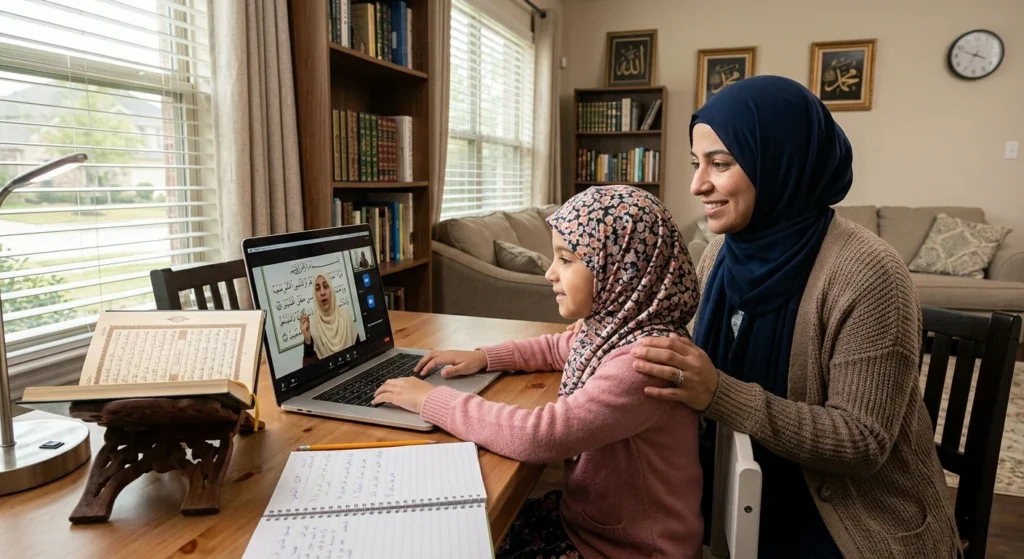
Finding a trustworthy online female Quran teacher can feel difficult for many Muslim families in the USA. Parents want more than flexible class timings. They want safe learning, qualified teachers, clear communication, and a positive Islamic environment for their children. Sisters also want privacy, comfort, and patient guidance while learning the Qur’an online.
The problem is that many Quran academies make similar promises. Almost every website claims to offer experienced teachers and personalized classes. Yet very few explain how families can truly verify those claims before enrolling.
This guide explains how to choose a qualified female Quran teacher, what warning signs to avoid, and how online Quran learning can become a meaningful experience for both sisters and young kids.
A verified online female Quran teacher is a qualified instructor who teaches Quran reading, Tajweed, and Islamic studies through secure online classes while providing authentic certifications, structured lesson plans, and safe learning support for sisters and children.
Why Families Prefer Female Quran Teachers
Many families feel more comfortable when children and sisters learn with female instructors. Young students often respond better to calm communication and gentle correction during lessons.
For sisters, private learning can remove hesitation and create a more relaxed environment. Students usually feel more confident asking questions and practicing recitation without pressure.
Online learning also helps busy families manage Quran education around school, work, and home responsibilities.
Parents often choose female Quran teachers because they want:
- One-on-one attention
- Comfortable learning for daughters
- Child-friendly teaching styles
- Flexible schedules in USA time zones
- Better parent involvement
A good Quran teacher does more than teach pronunciation. She helps students develop confidence, discipline, and consistency in learning.
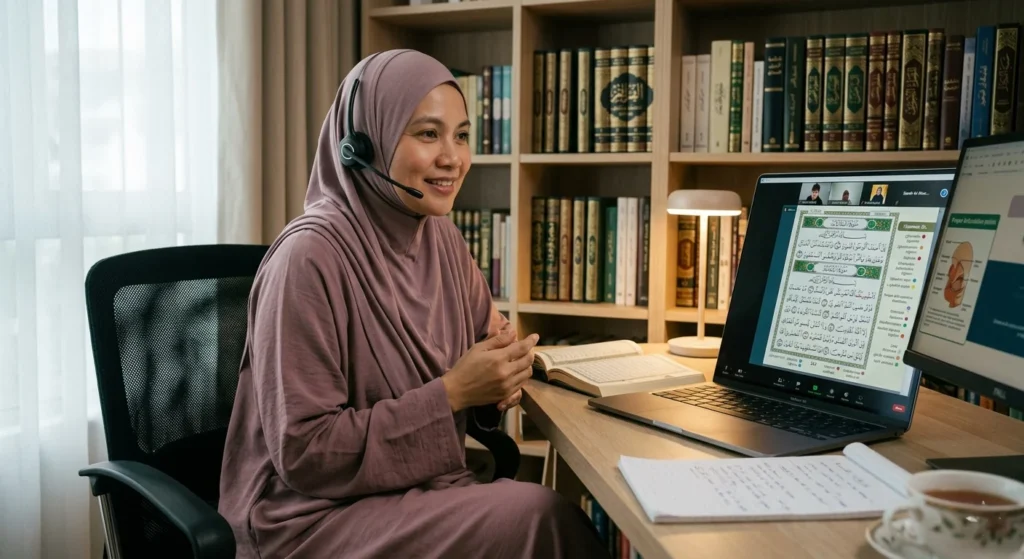
What Makes an Online Female Quran Teacher Verified?
A verified teacher is someone whose qualifications and teaching background can be clearly confirmed.
This usually includes:
- Quran teaching certification
- Strong understanding of Tajweed
- Experience teaching beginners or children
- Structured lesson planning
- Professional communication skills
- Safe online teaching practices
Some teachers also hold Ijazah certification, which shows they learned Quran recitation through an authentic chain of Islamic instruction.
Parents can verify an online female Quran teacher by checking Quran certifications, Tajweed qualifications, teaching experience, trial classes, communication style, and child safety policies before enrolling their children.
Families should also ask whether the academy monitors classes, tracks progress, and allows parent feedback.
Why Verification Matters for Parents
Many parents worry about online learning because they cannot physically observe the classroom environment. That concern is understandable.
A verified teacher reduces uncertainty and helps parents feel more secure about:
- Teaching quality
- Student safety
- Quran pronunciation accuracy
- Lesson consistency
- Child engagement
Without proper verification, families may struggle with unorganized lessons or teachers who lack experience working with children.
Strong academies explain their teaching process clearly instead of relying on vague marketing promises.
Signs of a Trustworthy Quran Teacher
Not every qualified teacher is the right fit for every student. Families should look beyond sales language and focus on practical teaching quality.
Strong Tajweed Knowledge
A teacher should know how to correct pronunciation patiently and clearly. Beginners often struggle with Arabic sounds that do not exist in English.
An experienced tutor notices mistakes early and helps students improve step by step.
Experience Teaching Young Children
Teaching children requires patience and structure.
Skilled teachers usually:
- Keep lessons focused
- Use repetition carefully
- Encourage shy students
- Adjust lesson speed
- Maintain positive energy
Children learn better when they feel relaxed and motivated.
Clear English Communication
For families in the USA, communication matters just as much as recitation skills.
Students should easily understand:
- Homework instructions
- Pronunciation corrections
- Lesson expectations
- Daily practice goals
Clear communication prevents confusion and helps children stay engaged.
Organized Curriculum
Strong academies follow a structured learning path instead of random lessons.
Many beginners start with Noorani Qaida before moving into Quran reading and Tajweed practice.
A clear curriculum helps students progress steadily without feeling overwhelmed.
How Online Quran Classes Usually Work
Most online Quran programs follow a simple process designed for beginners and families.
Step 1: Trial Class
A trial lesson helps parents evaluate:
- Teacher behavior
- Communication style
- Student comfort
- Internet quality
- Teaching methods
Parents should attend the first lesson whenever possible.
Step 2: Student Assessment
The academy checks the student’s level and learning goals.
This may include:
- Arabic letter recognition
- Quran reading ability
- Tajweed level
- Memorization goals
- Beginner fluency
The assessment helps teachers create realistic lesson plans.
Step 3: Regular Weekly Lessons
Most students attend:
- Two to five classes weekly
- One-on-one sessions
- Short focused lessons
Young children usually perform better in shorter sessions with regular repetition.
Step 4: Progress Tracking
Trusted academies often provide:
- Monthly evaluations
- Parent updates
- Attendance reports
- Memorization tracking
- Recitation feedback
Progress reports help families stay involved and motivated.
Verified vs Non-Verified Quran Teachers
| Feature | Verified Teacher | Non-Verified Teacher |
|---|---|---|
| Quran Certification | Clearly confirmed | Often unclear |
| Tajweed Training | Structured learning | Limited proof |
| Child Safety Policies | Explained openly | Rarely discussed |
| Parent Communication | Regular updates | Minimal contact |
| Teaching Experience | Documented | Difficult to verify |
| Lesson Structure | Organized curriculum | Inconsistent planning |
| Trial Classes | Usually available | Sometimes missing |
This comparison matters because Quran learning is deeply personal for Muslim families. Parents deserve transparency before making a commitment.
Common Parent Concerns About Online Quran Classes
Many families hesitate before starting online Quran lessons. Most concerns come from wanting the best environment for children.
“Will My Child Stay Focused?”
Children lose attention quickly during long or repetitive lessons.
Experienced teachers keep students engaged by:
- Asking frequent questions
- Using repetition naturally
- Offering encouragement
- Changing activities during class
- Keeping lessons age-appropriate
Consistency matters more than lesson length.
“How Can I Trust the Teacher?”
Parents should ask direct questions about:
- Teacher qualifications
- Academy supervision
- Trial lessons
- Parent observation options
- Student progress tracking
Reliable academies answer these questions openly and confidently.
“Can Kids Really Learn Quran Online?”
Yes, many children learn very effectively online when classes stay structured and interactive.
One-on-one lessons often improve learning because the teacher gives full attention to a single student instead of managing a crowded classroom.
Mistakes Families Should Avoid
Choosing the wrong academy can slow progress and reduce motivation.
Choosing Based Only on Low Price
Very cheap classes sometimes lead to:
- Untrained teachers
- Weak lesson planning
- Poor communication
- Inconsistent scheduling
Quality Quran education requires preparation and experience.
Skipping the Trial Class
A trial class reveals important details that websites cannot show.
Families should observe:
- Teacher patience
- Child engagement
- Pronunciation correction
- Lesson organization
Even qualified teachers may not match every student’s personality.
Ignoring Communication Skills
Some teachers know Quran well but struggle to explain concepts clearly to English-speaking students.
Good communication helps children feel confident and comfortable during lessons.
Expecting Immediate Results
Learning the Quran takes time and consistency.
Students improve through:
- Daily practice
- Patient correction
- Structured repetition
- Positive encouragement
Steady progress creates stronger long-term results.
What Makes a Great Quran Academy Different?
Many Quran websites repeat the same phrases:
- Qualified teachers
- Flexible schedules
- Personalized classes
- Free trial lessons
Strong academies go further by explaining how they support students and families.
Transparent Verification
Trusted academies clearly explain:
- Teacher qualifications
- Hiring standards
- Experience levels
- Student matching systems
Child-Friendly Teaching Methods
Experienced tutors understand:
- Short attention spans
- Beginner frustration
- Confidence building
- Age-based pacing
Children learn better when teachers adapt lessons to their personality and ability level.
Parent Involvement
Families should never feel disconnected from the learning process.
Good academies encourage:
- Parent feedback
- Lesson observation
- Regular communication
- Progress discussions
Structured Learning Path
Strong programs guide students step by step:
- Arabic letters
- Basic reading
- Tajweed practice
- Fluency improvement
- Hifz goals
A structured path prevents confusion and supports long-term progress.
Questions Parents Should Ask Before Enrolling
Families should ask important questions before choosing a teacher.
- Does the teacher specialize in children or beginners?
- Are trial classes available?
- How is student progress measured?
- What curriculum will students follow?
- How are pronunciation mistakes corrected?
- Can parents observe lessons?
- Are female-only classes available?
- What happens if schedules change?
The answers often reveal whether an academy values quality or simply wants quick enrollments.
What Sisters Should Look for in a Quran Teacher
Many sisters prefer private online lessons because they provide comfort, flexibility, and focused learning.
Sisters should look for qualified female Quran teachers with strong Tajweed knowledge, respectful communication, flexible scheduling, and structured one-on-one lessons that support steady Quran learning.
Private lessons also help adult students learn at their own pace without feeling embarrassed about mistakes.
Many sisters focus on:
- Quran reading fluency
- Tajweed improvement
- Memorization goals
- Flexible evening schedules
- Beginner-friendly teaching
A supportive teacher often becomes the reason students stay consistent.
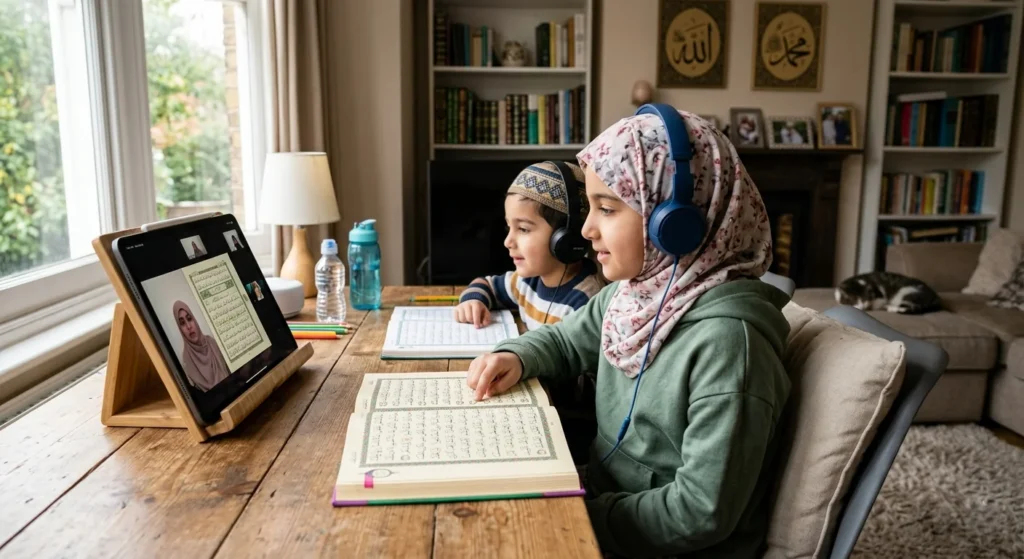
The Long-Term Impact of the Right Teacher
A positive Quran learning experience can shape a child’s connection with Islam for years.
Children who learn in a calm and encouraging environment often:
- Develop stronger recitation habits
- Build confidence in Islamic learning
- Stay motivated longer
- Feel emotionally connected to the Quran
The goal is not only correct pronunciation. The goal is helping students love learning the Quran.
Even a few consistent classes each week can create meaningful spiritual growth over time.
Start With a Low-Risk Trial Class
Many parents delay enrollment because they fear choosing the wrong academy.
A trial class reduces that pressure and helps families make informed decisions.
It allows parents to:
- Meet the teacher
- Observe lesson quality
- Check communication style
- Evaluate child comfort
- Understand the learning structure
Families do not need to rush the process. A careful decision today can lead to years of confident Quran learning for sisters and young children.
FAQs
Parents can verify an online female Quran teacher by checking certifications, Tajweed qualifications, teaching experience, trial classes, and child safety policies.
Yes, online Quran classes can be safe when families choose trusted academies with supervised lessons, qualified teachers, and transparent communication.
A qualified Quran teacher should have strong Tajweed knowledge, Quran teaching experience, communication skills, and recognized Islamic certifications.
Yes, many online Quran academies offer private one-on-one Quran classes for sisters with flexible schedules and female teachers.
Conclusion
Choosing the right online female Quran teacher requires more than trusting website promises. Families should look for verified qualifications, strong Tajweed knowledge, child-safe teaching methods, organized lesson plans, and clear communication.
The best teachers create more than online classes. They help students build confidence, consistency, and a meaningful connection with the Qur’an through patient guidance and structured learning.
For Muslim families in the USA, online Quran education can become a safe and rewarding part of daily life when the right teacher is chosen. Starting with a trial class is often the simplest and safest first step.