



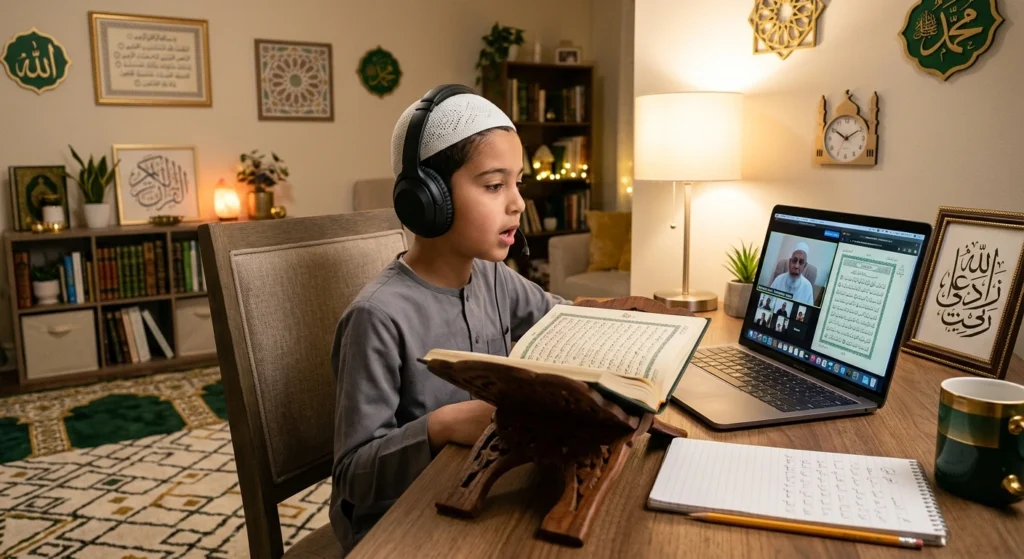
Starting a quran memorization online course can feel exciting, emotional, and a little intimidating at the same time. Many students begin with strong motivation, but families often wonder what daily Hifz life actually looks like after the first few weeks. Will the child stay consistent? Will revision become too difficult? Can online learning truly work?
The first 90 days answer many of those fears.
This early stage is not about rushing through pages. It is about building habits, strengthening focus, improving recitation, and developing a healthy connection with the Qur’an. With realistic goals and steady teacher support, students often gain confidence much faster than expected.
What Happens During the First 90 Days of Online Hifz?
The first three months of online Hifz Quran usually focus on routine building, pronunciation correction, daily revision, and steady memorization. Most students begin with smaller portions while teachers help improve fluency, confidence, and retention through structured practice.
For many families in the USA, this stage matters more than memorizing large amounts quickly. A strong foundation usually creates better long-term consistency.

Who This Journey Is Best For
Online Hifz programs work well for many different learners. Some students attend full-time school. Others balance college, work, or homeschooling. Many parents also prefer online learning because it removes travel stress and allows flexible scheduling.
This path may fit you well if you:
- Want structured Quran learning at home
- Need flexible class timings in US time zones
- Prefer one-on-one teacher attention
- Want regular progress updates
- Need a calm and safe learning environment
- Feel nervous about starting memorization alone
Many beginners assume they must already read perfectly before beginning Hifz. In reality, teachers often improve reading and Tajweed gradually during the process.
Why the First Three Months Matter So Much
The early stage shapes everything that follows later.
Students who build healthy routines early usually struggle less with forgetting later. Those who rush too quickly often feel discouraged after a few weeks. Experienced teachers understand this pattern well. That is why strong programs focus heavily on repetition, listening, and revision from the beginning.
Parents sometimes worry when progress feels slow during the first month. This is completely normal.
At first, students are learning several skills at once:
- Memorization techniques
- Correct pronunciation
- Listening discipline
- Revision habits
- Time management
- Focus and patience
These skills take time to settle. Once they become natural, memorization usually becomes smoother and less stressful.
Start Small and Build Consistency
Many students imagine Hifz as long hours of nonstop memorization. In reality, the first months often involve short but focused sessions.
A teacher may begin with:
- A few lines daily
- Slow repetition
- Listening to recitation first
- Reviewing old lessons before new ones
- Pronunciation correction during every class
This slower beginning protects students from burnout. It also improves long-term retention.
Families sometimes underestimate how important consistency becomes during Hifz. Even 20–30 focused minutes daily can create strong momentum over time.
What to Expect Month by Month
Month 1: Building Routine and Focus
The first month often feels like an adjustment period.
Students learn how classes work, how much they can memorize comfortably, and how to revise correctly. Many children memorize smaller portions at first while building confidence.
Teachers usually focus on:
- Fixing recitation mistakes
- Improving fluency
- Building listening habits
- Creating a study schedule
- Developing repetition skills
Mental fatigue is common during this phase. Some days feel productive. Other days feel difficult. This is a normal part of the learning process.
Month 2: Strengthening Retention
By the second month, students usually feel more comfortable with their routine.
Memorization often becomes easier because the brain adapts to repetition. Students also begin noticing stronger fluency during recitation.
This is usually when revision becomes more challenging.
A learner may memorize new verses well but struggle to recall older portions smoothly. Good teachers expect this stage and increase revision support carefully.
During this month, teachers often focus on:
- Daily review systems
- Slow recitation practice
- Listening before memorization
- Confidence building
- Mistake correction
Parents should avoid comparing children with other students during this phase. Every learner progresses differently.
Month 3: Building Momentum
By the third month, many students finally feel settled into the process.
The schedule becomes familiar. Memorization methods feel more natural. Students often begin reciting with better confidence and fewer pauses.
This stage also creates emotional growth.
Children often feel proud of their improvement. Adults notice stronger discipline in daily life. Some families even build better Islamic routines together because of the shared commitment to Quran study.
Challenges still exist, of course.
School exams, distractions, and tiredness can interrupt focus. The difference now is that students understand how to recover when routines slip.
How an Online Hifz Program Actually Works
Every academy follows its own method, but most structured programs include similar stages.
| Stage | What Happens | Main Goal |
|---|---|---|
| Assessment | Teacher checks fluency and reading level | Understand student needs |
| Goal Planning | Daily targets are created | Build realistic expectations |
| Memorization | Student learns small portions | Develop consistency |
| Revision | Older lessons reviewed daily | Improve retention |
| Correction | Teacher fixes recitation mistakes | Strengthen accuracy |
| Progress Tracking | Weekly evaluations and reports | Measure improvement |
This structure helps students avoid confusion. It also gives parents better visibility into progress.
Benefits Families Often Notice Early
A structured online program provides more than memorization alone.
Many families notice positive changes in discipline, focus, and daily routine during the first few months.
Some early benefits include:
- Better time management
- Stronger study habits
- Improved Quran recitation
- More confidence while reading aloud
- Daily connection with Islamic learning
- Organized revision routines
- Reduced learning overwhelm
- Flexible schedules for busy families
For children especially, consistent encouragement matters greatly. Small praise after a successful lesson often motivates students more than pressure.
Online Hifz vs Memorizing Alone
Some students begin memorizing independently before joining structured classes. While self-study helps motivated learners, many beginners struggle without guidance.
Here is why organized learning often works better:
| Structured Online Hifz | Self-Memorization |
|---|---|
| Teacher correction | Limited correction |
| Organized revision system | Often inconsistent |
| Accountability | Self-dependent |
| Weekly progress checks | Difficult to track |
| Parent communication | Minimal guidance |
| Tajweed supervision | Easy to overlook mistakes |
Qualified teachers often notice problems early before they become long-term habits.
Parent Fears Are Completely Normal
Many parents quietly worry about whether their child can manage Hifz emotionally and academically.
Some common concerns include:
- “What if my child loses motivation?”
- “Will school performance suffer?”
- “What if memorization becomes stressful?”
- “Is online learning truly effective?”
- “Will my child forget quickly?”
These concerns are understandable.
Strong Hifz programs do not expect children to become perfect overnight. Experienced teachers understand attention spans, school pressure, and emotional ups and downs. Good programs adjust pacing based on the student’s ability instead of forcing unrealistic goals.
Parents should also remember something important.
Steady progress matters far more than fast progress.
A child who memorizes calmly and consistently often retains better than someone pushed too hard too early.

Common Mistakes That Slow Down Quran Memorization
Many beginners make similar mistakes during the first few months. Most can be corrected easily when noticed early.
1. Memorizing Too Much Too Quickly
Students sometimes feel highly motivated and attempt large portions immediately. This usually weakens retention later.
Smaller, consistent lessons often produce better long-term results.
2. Ignoring Revision
New memorization feels exciting. Revision feels repetitive.
However, experienced Huffaz know that revision protects memorization over time. Without it, students forget quickly.
3. Inconsistent Study Schedules
Random study times make focus difficult.
The brain responds better to routine. Even short daily sessions create stronger memorization habits.
4. Weak Pronunciation Habits
Incorrect recitation becomes harder to fix later. Early correction in Tajweed matters greatly during the first stage.
5. Comparing Progress With Others
Every learner memorizes differently.
Some students memorize quickly but revise slowly. Others require more repetition while retaining better afterward. Comparison usually creates unnecessary pressure.
Can You Memorize Quran Online Successfully?
Yes. Many students successfully complete structured online Hifz programs through consistent revision, teacher supervision, and daily recitation. A guided online learning environment often provides flexibility while still maintaining accountability and progress tracking.
Families also appreciate learning from the comfort and safety of home.
How Much Quran Should a Beginner Memorize Daily?
Most beginners start with small portions depending on age, fluency, and schedule. Some students memorize a few lines daily, while others comfortably manage half a page. Strong retention and regular revision matter more than memorizing large amounts quickly.
Teachers usually adjust targets as students improve.
What Makes a Good Online Hifz Program Trustworthy?
Not all programs provide the same quality. Families should look carefully at structure, supervision, and teaching style before enrolling.
A reliable program usually includes the following:
Qualified Teachers
Students benefit greatly from experienced instructors who understand both memorization and teaching psychology.
Good teachers know when to encourage, slow down, or adjust methods based on student needs.
Safe Learning Environment
Parents should feel comfortable observing classes and communicating with teachers regularly. Professional communication builds long-term trust.
Organized Curriculum
Strong programs follow a clear roadmap instead of random lesson planning. Students should understand what they are working toward each week.
Progress Tracking
Regular feedback helps families stay informed. It also motivates students when they notice gradual improvement over time.
The Emotional Side of Hifz Matters Too
Memorizing Quran is not only an academic task.
Students experience emotional highs and lows throughout the process. Some days feel smooth. Others feel frustrating. This is completely normal.
Strong teachers understand these moments well.
Sometimes a child simply needs reassurance after struggling with revision. Sometimes an adult learner needs encouragement after balancing work and study all week. Compassion often matters just as much as discipline during long-term memorization.
Families who approach Hifz with patience usually create healthier learning experiences.
Why Many USA Families Prefer Online Hifz Today
For many American Muslim families, flexibility has become one of the biggest advantages of online learning.
Parents no longer need long drives after school. Students can learn safely from home. Busy schedules become easier to manage with customized class timings.
Online learning also gives families access to qualified teachers from different parts of the world. This wider access has helped many students begin Hifz earlier and more comfortably than before.
For shy learners especially, home environments sometimes improve focus and confidence.
FAQs
Yes. Many students successfully complete online Hifz programs through consistent revision, teacher supervision, and structured memorization routines.
Most beginners start with small portions such as a few lines or half a page daily, depending on their fluency and schedule.
Yes. Structured online Hifz classes with qualified teachers, revision systems, and parent communication can be highly effective for children.
The first 90 days usually focus on routine building, pronunciation correction, daily revision, and developing consistent memorization habits.
Most quality online Hifz programs include Tajweed correction to help students memorize and recite the Quran accurately.
A Small Daily Habit Can Change the Future
The first 90 days may not turn someone into a Hafiz immediately. But they often build something equally important at the beginning: consistency.
A student who learns how to sit daily with the Quran develops discipline that reaches beyond memorization itself. Families often notice stronger routines, improved focus, and deeper appreciation for the words of Allah during this process.
That transformation usually begins with one simple step – starting.
If you or your child have been considering a quran memorization online course, beginning with a free trial class can reduce uncertainty and help you understand the teaching style, schedule, and learning environment before making a full commitment.
Sometimes the hardest part of Hifz is not memorizing.