



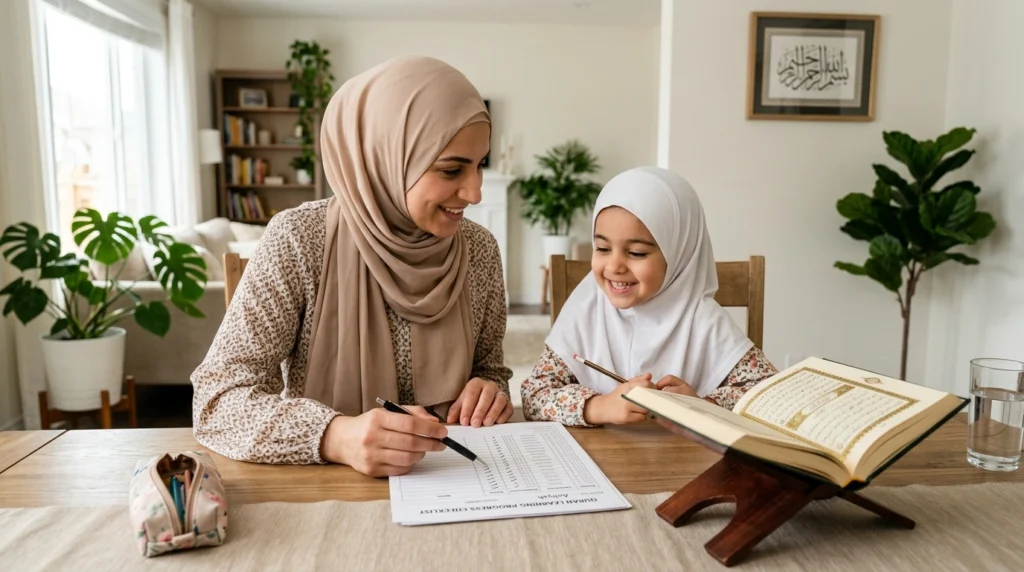
Quran learning progress can be measured by tracking a child’s recitation accuracy, memorization retention, confidence, consistency, and application of Tajweed rules.
Over the years, our Quran teachers have worked with hundreds of children across the USA, UK, Canada, and Australia. One of the most common questions parents ask is:
“My child attends Quran classes regularly, but how do I know they are actually progressing?”
This concern is completely understandable. Quran learning develops gradually, and meaningful improvement often appears in small milestones that parents may not immediately recognize.
The good news is that you do not need to be an Arabic expert or Quran teacher to evaluate your child’s progress effectively. Parents do not need advanced Islamic knowledge to evaluate growth. Simple observations, teacher feedback, and clear milestones can reveal whether a child is moving forward and where extra support may be needed.
Who This Guide Is For
This guide is designed for:
- Parents whose children attend online Quran classes
- Families teaching Quran at home
- Students learning through Noorani Qaida
- Children studying Tajweed
- Families pursuing Hifz goals
- Muslim households seeking measurable Quran education outcomes
Whether your child is a beginner or an experienced reader, understanding progress markers helps you make informed decisions.
Why Measuring Quran Learning Progress Matters
Many parents focus on attendance.
However, attendance alone does not guarantee improvement.
Tracking growth helps parents understand whether a child is developing the skills needed for long-term success. It also creates opportunities to celebrate achievements and address challenges before they become obstacles.
Emotional Benefits
- Builds confidence in children
- Reduces parental uncertainty
- Encourages a positive relationship with the Qur’an
- Creates motivation through visible achievement
- Strengthens family involvement in Islamic education
Practical Benefits
- Identifies learning gaps early
- Improves parent-teacher communication
- Supports realistic goal setting
- Encourages consistent revision
- Provides measurable learning outcomes
Educational studies consistently show that regular revision and spaced repetition improve long-term retention compared to mass memorization.
What Quran Teachers Notice Before Parents Do
Experienced Quran teachers often identify progress before it becomes visible to parents.
For example, a student may still read slowly, but their pronunciation mistakes may decrease significantly. Another student may memorize fewer Surahs than classmates but retain them more accurately weeks later.
These improvements often indicate stronger long-term Quran learning outcomes than rapid memorization alone.
How Quran Learning Progress Works
Many families expect rapid results.
In reality, Quran learning follows a structured process. Each stage builds upon the previous one.
A child usually progresses through the following sequence:
- Learning Arabic letters and sounds
- Completing Noorani Qaida lessons
- Developing reading fluency
- Applying Tajweed rules
- Building memorization skills
- Strengthening retention through revision
- Reciting independently with confidence
Understanding this progression helps parents evaluate growth more accurately.
7 Signs Your Child Is Making Real Progress
1. Reading Fluency Improves
Beginners often pause frequently while reading.
As skills develop, children recognize words more quickly and read with fewer interruptions. Small gains in fluency often indicate meaningful improvement.
2. Pronunciation Becomes Clearer
Accurate pronunciation is one of the easiest signs to observe.
Listen for:
- Clear articulation of Arabic letters
- Fewer pronunciation corrections
- Greater confidence while reciting
- Improved consistency across lessons
3. Tajweed Appears Naturally
Many students can explain Tajweed rules.
The real breakthrough occurs when they apply those rules during recitation without constant reminders.
This demonstrates understanding rather than simple memorization.
4. Memorized Surahs Stay Retained
Fast Quran memorization is impressive.
Strong retention is more important.
Ask your child to recite a Surah learned several weeks earlier. Consistent recall often reflects healthy learning habits and effective revision.
5. Confidence Continues to Grow
Children who feel comfortable reading aloud usually show genuine progress.
They volunteer to recite more often and become less hesitant when mistakes occur.
6. Recurring Mistakes Decrease
Every student makes mistakes.
What matters is whether the same mistakes continue month after month.
When repeated errors gradually disappear, growth is taking place.
7. Interest in the Qur’an Increases
One of the strongest indicators cannot be measured by numbers.
Children who willingly practice, ask questions, and engage with lessons often build a lasting connection with the Qur’an.
How Can Parents Measure Quran Learning Progress at Home?
Parents can measure progress by observing reading fluency, pronunciation accuracy, Tajweed application, memorization retention, lesson consistency, confidence, and teacher feedback. Weekly observations combined with monthly reviews provide a reliable picture of long-term development.

A Practical Weekly Quran Progress Checklist
Parents do not need complicated systems.
A simple checklist can provide valuable insights.
Track:
- Lessons completed
- Practice sessions attended
- New Surahs memorized
- Previously memorized Surahs retained
- Reading fluency
- Confidence level
- Teacher comments
- Revision consistency
Review these points once a week.
Over time, patterns become easy to identify.
Quran Learning Milestones by Stage
| Learning Stage | Progress Indicators |
|---|---|
| Beginner | Recognizes Arabic letters and sounds |
| Noorani Qaida | Reads words accurately with support |
| Early Quran Reading | Reads short passages independently |
| Tajweed Development | Applies basic rules consistently |
| Intermediate Level | Recites more smoothly and confidently |
| Hifz Stage | Memorizes and retains verses effectively |
| Advanced Student | Demonstrates strong fluency and accuracy |
Parents should evaluate progress according to the child’s stage rather than comparing them with others.
Healthy Progress vs Warning Signs
| Indicator | Healthy Progress | Potential Concern |
| Attendance | Consistent participation | Frequent absences |
| Recitation | Gradual improvement | Same mistakes persist |
| Tajweed | Better rule application | Little noticeable development |
| Memorization | Strong retention | Regular forgetting |
| Motivation | Positive engagement | Loss of interest |
| Confidence | Comfortable recitation | Avoids reading aloud |
A single concern does not always indicate a problem.
However, multiple warning signs may suggest the need for additional support.
Common Parent Fears and What They Really Mean
Parents often worry when progress seems slow.
In most cases, those concerns are manageable.
“My Child Learns Slower Than Other Students”
Every child develops differently.
Some children memorize quickly but need more pronunciation practice. Others build strong reading skills before memorization accelerates.
Meaningful progress should always be measured against previous performance, not another student’s pace.
“I Don’t Know Arabic”
Many parents share this concern.
Fortunately, you can still evaluate:
- Consistency
- Effort
- Confidence
- Memorization retention
- Teacher feedback
- Practice habits
These indicators provide valuable insight even without Arabic knowledge.
“Online Classes Make Progress Hard to Monitor”
Quality programs should provide clear communication and measurable goals.
Parents should never feel disconnected from their child’s learning experience.
How Qualified Teachers Measure Student Development
Experienced teachers assess far more than memorization numbers.
They evaluate:
- Reading accuracy
- Pronunciation quality
- Tajweed application
- Retention strength
- Listening skills
- Response to corrections
- Consistency across lessons
For example, a child who memorizes fewer verses but retains them accurately may be progressing better than a child who forgets large portions after memorization.
This distinction is often overlooked.
The Importance of Progress Tracking Reports
Many successful Quran programs provide structured assessments.
These reports help parents understand:
- Current skill level
- Areas of improvement
- Strengths and weaknesses
- Learning goals
- Recommended next steps
Regular progress tracking reduces uncertainty and improves accountability.
This is one reason many families prefer structured online Quran programs.
Looking for More Structured Support?
Parents who want measurable outcomes often benefit from programs such as Learn Quran for Kids, Quran Education for Kids, and Personalized Quran Learning for Kids. These programs typically include guided milestones, individualized instruction, and ongoing feedback.
Why Personalized Quran Learning Produces Better Results
Children learn differently.
A one-size-fits-all approach rarely serves every student effectively.
Personalized instruction allows teachers to:
- Adjust lesson pace
- Address weaknesses quickly
- Build confidence gradually
- Create realistic goals
- Focus on individual learning styles
This approach often leads to stronger long-term retention and better learning outcomes.
What Is the Best Indicator of Quran Learning Success?
The strongest indicator of success is consistent improvement over time. A child who reads more accurately, retains memorization, applies Tajweed effectively, and demonstrates growing confidence is making meaningful progress, even if advancement appears gradual.
Common Mistakes Parents Should Avoid
Focusing Only on Memorization
Memorization is valuable.
However, reading accuracy, pronunciation, and understanding deserve equal attention.
Comparing Children to Others
Comparison often creates pressure rather than motivation.
Focus on your child’s personal growth journey.
Ignoring Revision
New memorization receives attention.
Revision often does not.
Without regular review, retention becomes difficult.
Expecting Immediate Results
Quran learning is a long-term investment.
Sustainable improvement matters more than quick gains.
Measuring Progress Too Frequently
Daily evaluations can discourage children.
Weekly and monthly reviews provide a more accurate perspective.
Overlooking Teacher Feedback
Teachers often notice patterns that parents cannot see during short practice sessions.
Regular communication strengthens learning outcomes.
What Success Can Look Like One Year From Now
Imagine your child opening the Qur’an with confidence.
They recognize words comfortably. They apply Tajweed naturally. They remember previously learned Surahs and approach lessons with enthusiasm.
Instead of wondering whether progress is happening, you can clearly see it.
This transformation rarely comes from pressure.
It grows through consistency, quality instruction, patient guidance, and active parental support.
What to Look for When Choosing Quran Classes
If your child needs additional support, look for programs that provide:
- Qualified Quran teachers
- Child-friendly teaching methods
- Structured curriculum
- Clear learning milestones
- Progress assessments
- Parent communication
- Safe online learning environments
These features reduce risk and help families make confident educational decisions.
Parents searching for comprehensive support may also explore the Best Online Quran Classes for Kids USA to compare learning options and assessment approaches.
How Alhamd Islamic Center Tracks Student Progress
At Alhamd Islamic Center, student progress is monitored through structured lesson plans, regular teacher assessments, memorization reviews, Tajweed evaluations, and parent feedback sessions.
Our qualified male and female Quran teachers help students develop reading accuracy, memorization retention, and confidence through personalized one-on-one instruction.
This structured approach allows parents to clearly understand their child’s Quran learning journey and identify areas for continued growth.
FAQs
Parents can track reading fluency, pronunciation accuracy, memorization retention, Tajweed application, confidence, and consistency through regular observation and teacher feedback.
Weekly reviews and monthly milestone assessments provide a balanced and accurate picture of Quran learning development.
Yes. Parents can monitor consistency, confidence, retention, practice habits, and teacher reports even without Arabic knowledge.
Consistent improvement in recitation accuracy, Tajweed application, memorization retention, and confidence are strong indicators of success.
Revision strengthens memorization retention and helps students maintain previously learned Surahs and verses over time.
The time required varies based on the child’s age, consistency, learning ability, and practice habits. Most children who attend regular Quran classes and practice consistently can develop basic Quran reading fluency within 6 to 12 months. More advanced fluency, including accurate Tajweed application, may take longer depending on individual progress.
Parents should focus on consistency rather than speed. Review attendance, practice habits, revision routines, and teacher feedback before becoming concerned. Every child learns at a different pace, and gradual improvement in reading accuracy, confidence, and retention often indicates healthy progress even when results seem slow.
Yes. Online Quran classes can be highly effective when taught by qualified teachers through structured one-on-one lessons. Personalized instruction, regular assessments, and consistent communication between teachers and parents often help children make measurable progress in Quran reading, Tajweed, and memorization.
Qualified Quran teachers evaluate students through reading accuracy, pronunciation quality, Tajweed application, memorization retention, lesson participation, and response to corrections. Regular assessments help identify strengths, learning gaps, and areas that require additional practice.
Both Tajweed and memorization are important aspects of Quran learning. Tajweed ensures that the Quran is recited correctly and preserves the proper pronunciation of Arabic letters and words. Memorization helps students retain Quranic verses. Ideally, students should develop both skills together for balanced Quran education.
Common signs of progress include smoother Quran reading, improved pronunciation, better Tajweed application, stronger memorization retention, increased confidence during recitation, and greater enthusiasm for learning. Regular teacher feedback can also help parents track these improvements over time.
A Real Example of Quran Learning Progress
Consider a child who begins online Quran classes unable to recognize Arabic letters confidently.
After three months, they complete Noorani Qaida and start reading short Quran passages.
After six months, they apply basic Tajweed rules and memorize several short Surahs.
By the end of the first year, they recite independently with greater fluency and confidence.
While the progress may seem gradual day to day, the long-term transformation is often remarkable.
Ready to Assess Your Child’s Quran Learning Progress?
If you're unsure whether your child is progressing effectively, Alhamd Islamic Center offers a free trial class and Quran assessment. Our qualified teachers evaluate reading fluency, Tajweed application, memorization level, and overall learning progress to help parents understand the next steps in their child's Quran education journey.
Conclusion
Tracking Quran learning progress does not require advanced Arabic skills or teaching experience. Parents can measure improvement through reading fluency, pronunciation accuracy, memorization retention, confidence, consistency, and teacher feedback.
The most successful students are not always the fastest learners. They are the children who receive steady guidance, follow a structured learning path, and develop a genuine connection with the Qur’an.
By focusing on meaningful milestones instead of quick results, parents can accurately measure Quran learning progress and confidently support their child’s growth while building Quran recitation skills that last a lifetime.
About the Author
This article was reviewed by qualified Quran educators at Alhamd Islamic Center, including Ustadh Waseem Abbas. Our teachers have experience teaching Quran reading, Noorani Qaida, Tajweed, and Hifz to students across the USA, UK, Canada, and Australia through personalized one-on-one online classes.