




Introduction
Online Quran learning for kids is now mainstream. Parents in the US, UK, Australia and Canada choose virtual classes for convenience and quality. This guide shows how children learn Quran online effectively. It explains methods, tools, tutor selection and parental roles. It is practical and safe for the Online Quran Learning for Kids.
Why Quran Learning Early Matters
The study of Quran cultivates the language, discipline and spiritual practices. Exposure at a tender age assists children in reading Arabic script properly. The practice of tajweed that is initiated early in life minimizes mistakes in later stages. In addition to memorising, studying Quran builds empathy and morality. These results can be achieved by online Quran classes in case they are designed properly.
Set Clear Learning Goals
Start with a clear objective. Aims and objectives determine the course and the tutor. Typical goals:
- Master to distinguish pronunciation in Quran.
- Study the simple Tajweed rules and put it into practice.
- Learn surahs of short length and later longer parts (Hifz).
- Know basic meanings and morals.
Break goals by age and ability. For example:
- 4–6 years of age: letters recognition, remembering surahs with great simplicity, simple surah recitation.
- 7–10 years: longer reading, elementary Tajweed, lesser memorization objectives.
- 11+: serious Tajweed, new level, likes tafsir.
Use milestones. Milestones make progress visible and motivate children.
Choose the Right Course and Tutor

Not all online Quran programs are equal. Prioritise the following criteria:
- Qualification and certification: Find tutors who have the qualification of ijazah or Tajweed.
- Child-focused pedagogy: Tutors should also be aware of how the children should be taught. Gain children experience and age-related material.
- Language skills: In the US/UK/Australia and Pakistan, an English-speaking tutor assists in clarifying concepts. Pronunciation is best done by Arabic-native tutors.
- Class format: Individual lessons are appropriate to beginners and Hifz. Social learning and reduced cost can be achieved through small-group classes.
- Trial lesson and references: Use a trial class. Check parent reviews and sample lesson recordings.
- Ask about curriculum: A good program will offer a clear path from reading to Tajweed to memorization and basic tafsir.
Build a Consistent Routine and Learning Space
Routine beats intensity. Short, daily sessions work better for kids than long, irregular classes. Recommended structure:
- 15–30 minutes daily for young children.
- 30–45 minutes for older children, split across two sessions if needed.
Create a distraction-free learning corner. Minimal toys, good lighting, a stable internet connection, and a headset help. Use a dedicated Quran or digital app for practice.
Use Interactive Tools and Blended Learning
Digital tools accelerate learning when used correctly.
- Interactive whiteboards: Tutors can mark letters and Tajweed rules live.
- Audio recording: Allow children to record recitation and review it with the tutor. Self-listening improves accuracy.
- Gamified apps: Use games for letter recognition and short surah practice. Avoid letting the app replace live instruction.
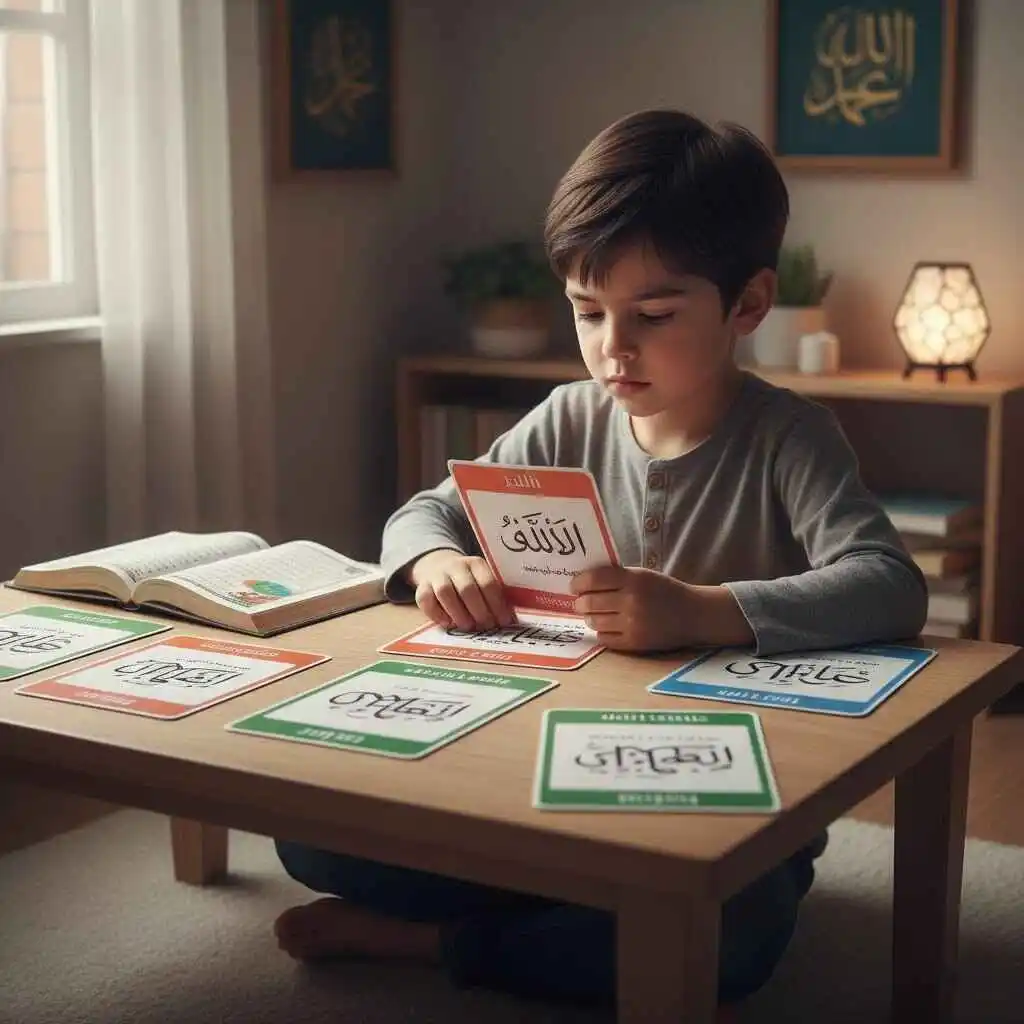
- Printed workbooks and flashcards: Combine screen lessons with physical practice. Flashcards help memorization for young children.
Blended learning mixes live tutor time with independent practice. It scales progress while keeping tutor time for corrections and Tajweed.
Teaching Tajweed to Children
Tajweed is central. Introduce simple rules first. Focus on pronunciation and articulation. Key principles:
- Correct articulation points (Makharij).
- Proper lengthening (Madd) basics.
- Clear distinctions between similar letters (e.g., غ vs ع).
Use slow, repetitive recitation. Use audio models from qualified reciters. For kids, make Tajweed practical and short. Avoid overwhelming technical detail at the start.
Memorization Strategies for Kids (Hifz)
Memorization must be gradual and joyful.
- Small chunks. Start with short surahs. Repeat small phrases before adding new ones.
- Daily revision. Review previously memorized portions every day. Space repetition helps retention.
- Parental revision sessions. Parents should sit with children for short daily revision checks.
- Use melody wisely. Gentle, consistent recitation patterns help memory. Avoid changing tune frequently.
- Assessments. Weekly or bi-weekly recitation checks with the tutor maintain accountability.
Consistency matters more than duration.
Parental Roles and Involvement
Parental support is the highest leverage input.
- Be present during lessons at first, especially for children under 10. This helps with focus and discipline.
- Track progress. Keep a simple log of lessons completed, new rules learned and surahs memorized.
- Praise effort. Reward consistency and attempt rather than only perfect recitation.
- Model reading. Parents who listen to or read Quran create a learning culture at home.
- Coordinate with the tutor. Agree on goals and ask for weekly feedback.
Parents are not a substitute for a qualified tutor, but they are essential to reinforce learning.
Overcoming Common Challenges
- Short attention spans: Use micro-sessions and change activities every 10–15 minutes.
- Screen fatigue: Keep screens only for live teaching. Use printed materials for follow-up practice.
- Technical issues: Have a backup connection plan. Record lessons so a missed connection does not lose progress.
- Motivation dips: Use small rewards, certificates and friendly competitions with siblings or peers.
- Pronunciation plateau: Increase short, focused tutor-led drills and use recording for self-correction.
Anticipate challenges and solve them with small operational fixes.
Safety and Safeguarding Online
Pick platforms that enforce child safety. Check:
- Background checks for tutors.
- Clear policies on privacy and session recordings.
- Secure payment and data handling.
Teach children basic online safety. Never share personal details. Use school-style rules for online etiquette.
Choosing Programs by Region Needs
Families in the US, UK, Australia and Canada have different needs. Consider:
- Time zone compatibility for live lessons.
- Language of instruction. Many families prefer English explanations plus Arabic recitation.
- Local cultural comfort. Female tutors may be preferred for younger girls in some families.
- Pricing and payment options suited to your country.
Most reputable online academies can match tutors based on these constraints.
Measuring Progress and Success
Measure both technical skill and spiritual engagement.
- Reading fluency. Speed and accuracy of reading.
- Tajweed application. Number of corrected recurring mistakes reduced over time.
- Memorization retention. Ability to recall previously memorized surahs after intervals.
- Engagement. Attitude towards lessons and voluntary practice outside scheduled classes.
Use short monthly reports from tutors. Celebrate milestones publicly at home.
Recommendations for Parents (Quick Checklist)
- Define learning goals and milestones.
- Book a qualified tutor and try a trial lesson.
- Set daily short practice sessions.
- Create a quiet learning area.
- Combine live lessons with printed practice and audio review.
- Keep parental involvement high for young children.
- Prioritise safety and tutor vetting.
Conclusion
Online learning of Quran among kids is effective when there is structure and support. Select a competent tutor, establish specific objectives, employ integrated tools, and remain a parent. The little steps taken daily add up to good reading, correct Tajweed and permanent memorization. Begin with a single trial lesson and a basic 10-minute daily routine. Progress will follow.
FAQS:
Children can begin online Quran learning as early as age 4-5, starting with Noorani Qaida to recognize Arabic letters and pronunciation.
Yes. With qualified tutors, structured lessons, and parental support, online Quran classes are as effective as in-person learning.
For younger kids, 15-30 minutes daily is ideal. Older children can study 30-45 minutes, split into shorter sessions.
Select tutors with verified Tajweed certification, child-friendly teaching methods, and strong communication in English and Arabic.
Interactive whiteboards, recitation recordings, printed Qaida, and Quran learning apps all enhance engagement and understanding.
Yes, if parents choose platforms with background-checked tutors, secure payment systems, and strict privacy policies.
Stay present during early lessons, track progress, encourage consistency, and revise memorized surahs together.