




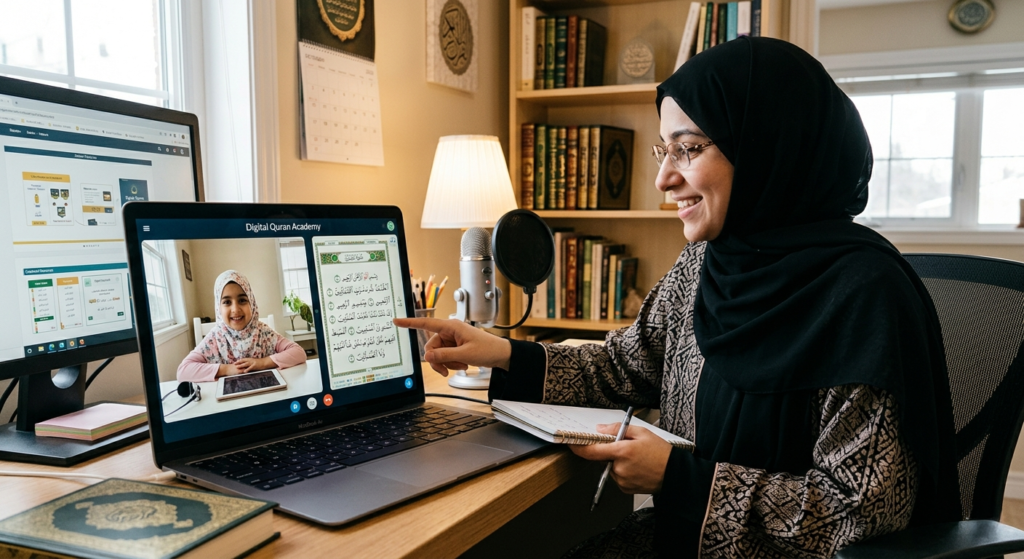
Many Muslim parents in the USA feel unsure when choosing an Islamic online learning platform. There are many options, but not all offer the same quality, safety, or teaching depth. The right choice can shape a child’s connection with the Qur’an for years.
A strong platform should feel structured, safe, and easy to follow. It should support real learning, not just video lessons. Most importantly, it should build confidence in both parents and students from the first class.
An Islamic online learning platform should provide qualified teachers, a structured curriculum, flexible schedules, safe online classrooms, and clear progress tracking. It should help students learn Quran recitation, Islamic studies, and Tajweed in a consistent and supportive way.
Who This Is For
These platforms are designed for families who need flexibility without losing learning quality. They work well for children, teens, and adults starting or continuing Islamic education.
They are especially useful for:
- Muslim families in the USA
- Children learning Quran basics
- Busy school-going students
- Adults returning to Islamic studies
- Homeschooling parents
- Beginners starting with Noorani Qaida
- Learners working toward Hifz
Parents often choose online learning because it allows them to stay involved. They can observe progress and communicate with teachers easily.
Why It Matters
Choosing the wrong platform can lead to slow progress or loss of motivation. Some students even stop learning due to poor teaching methods.
A good platform changes that experience completely. It builds consistency and makes learning feel manageable. Students feel supported instead of pressured.
Parents also feel less stress when they see structured progress. They know their child is learning in a safe and guided environment.
How Islamic Online Learning Works
Understanding the process helps parents make better decisions.
Step 1: Initial Assessment
Students are evaluated to understand their reading level and current skills.
Step 2: Class Placement
They are placed in beginner, intermediate, or advanced groups based on ability.
Step 3: Live Learning Sessions
Teachers guide students in real time. Mistakes are corrected immediately.
This is especially important for Tajweed because pronunciation habits form early.
Step 4: Progress Tracking
Teachers record attendance, improvement, and memorization progress.
Step 5: Continuous Development
Students gradually move toward fluency, confidence, and deeper Islamic understanding.
Key Features to Look For
Qualified Teachers
Teachers should have Islamic education background and real teaching experience. Good teachers explain patiently and correct gently.
Structured Curriculum
Lessons should follow a clear path instead of random topics. A structured system builds steady progress.
Live Interactive Classes
Students should not just watch. They should actively read, repeat, and respond during lessons.
Flexible Scheduling
Families need timing options that match school and work routines.
Child-Safe Environment
Platforms must ensure safe communication and monitored learning spaces.
Progress Reports
Parents should receive regular updates about improvement and challenges.
Female Teacher Option
Some families prefer female instructors for comfort and cultural reasons.
Interactive Learning Methods
Engagement tools help children stay focused during lessons.
Device Compatibility
Classes should work smoothly on phones, tablets, and computers.
Trial Classes
Trial sessions reduce uncertainty before enrollment.
Comparison Table: Strong vs Weak Platforms
| Feature | Strong Platform | Weak Platform |
|---|---|---|
| Teachers | Qualified and experienced | Unverified tutors |
| Curriculum | Structured learning path | Unplanned lessons |
| Safety | Monitored environment | No clear supervision |
| Feedback | Regular progress reports | Limited communication |
| Engagement | Interactive learning | Passive teaching |
| Flexibility | Multiple schedules | Fixed timing only |
| Trial Access | Available | Not offered |
Trust Stack: What Parents Should Verify
Teacher Qualifications
Look for verified Islamic education and teaching experience.
Safety Measures
Ensure classes are monitored and communication is secure.
Supervision Clarity
Parents should understand how sessions are observed and managed.
Curriculum Structure
A clear roadmap shows how students progress step by step.
Progress Tracking
Learning should be measurable, not unclear or vague.
What Makes Strong Platforms Different
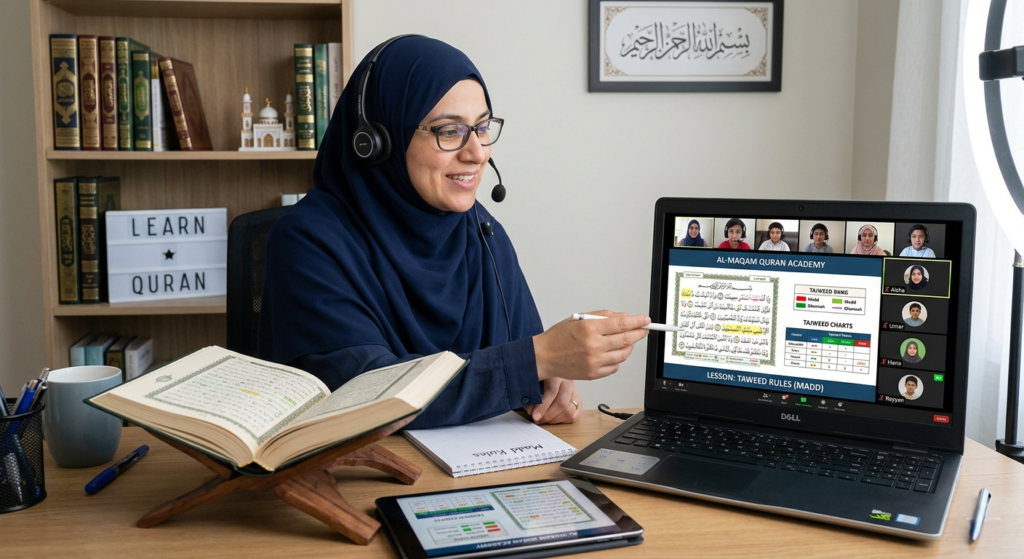
The best platforms do more than teach. They guide students with care and consistency.
They focus on:
- Personal attention for each student
- Patient correction and repetition
- Clear learning milestones
- Support for families
- Balanced Islamic and academic learning
This approach helps students build a stronger connection with the Qur’an over time.
Common Mistakes to Avoid
Many parents choose quickly without checking details. This often leads to disappointment later.
Avoid these mistakes:
- Choosing only based on price
- Ignoring teacher background
- Skipping trial classes
- Overlooking safety policies
- Not checking curriculum structure
- Ignoring progress reporting
- Selecting overcrowded classes
Careful selection improves long-term results significantly.
What Parents Often Worry About
Will my child stay focused online?
Yes, when teachers actively engage students instead of passive lectures.
Can online learning really build strong Quran skills?
Yes. Live correction helps students improve faster than self-study.
How do I know teachers are reliable?
Check qualifications, trial classes, and teaching approach before enrolling.
Is it safe for children?
Safe platforms use monitored systems and clear communication rules.
What is the most important feature in an Islamic online learning platform?
The most important feature is qualified teachers who provide structured learning, correct recitation, and guide students in understanding the Tajweed with consistency and care.
Are online Quran classes effective for kids?
Yes, they are effective when classes include live interaction, structured lessons, regular feedback, and active teacher engagement that keeps children focused and motivated.
FAQs
Look for qualified teachers, structured curriculum, safety measures, and progress tracking.
Yes, if the platform uses monitored classes and secure communication systems.
Yes, beginners often start with Noorani Qaida before advancing
It depends on consistency, class frequency, and individual learning pace.
It is a structured memorization program known as Hifz.
Final Message
A strong Islamic learning platform helps students grow step by step without pressure. It builds discipline, confidence, and a lasting connection with the Qur’an.
For families, the right choice reduces stress and creates a clear learning path. A small trial today can lead to long-term confidence in your child’s Islamic education journey.