



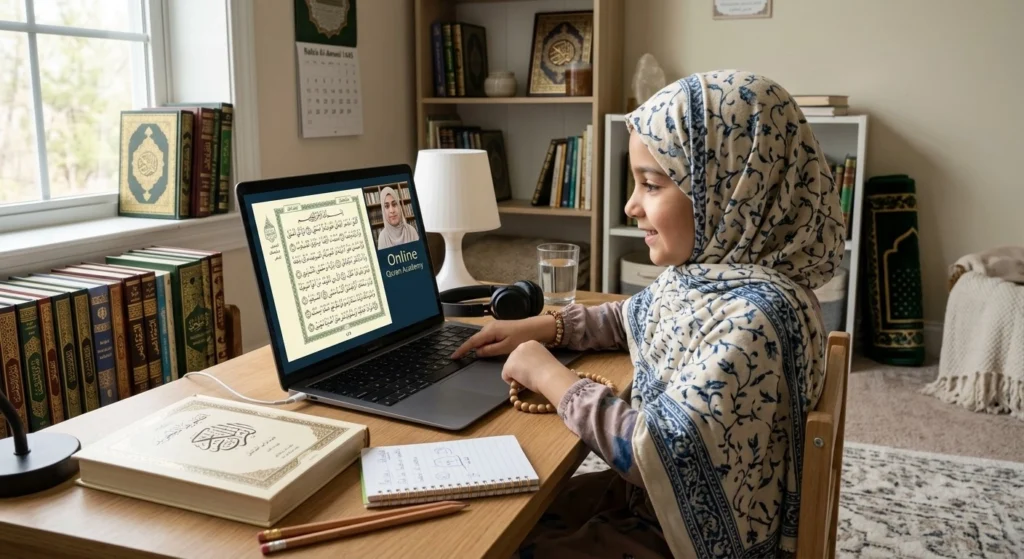
Wondering if your child is learning the Quran at the right pace? Al Hamd Islamic Center offers a free, no-obligation trial class with a qualified Ijazah-certified teacher. You’ll receive a personalized assessment and clear next steps based on your child’s age and current skill level.
Quran learning milestones are age-appropriate goals that help parents track a child’s progress in Quran education. These milestones include listening, Arabic letter recognition, Noorani Qaida completion, Tajweed development, Quran reading fluency, memorization, and understanding according to the child’s stage of growth.
One question worries many Muslim parents living in the USA, UK, Canada, and Australia:
“Is my child making enough progress with the Quran?”
You may see another child reciting beautifully and wonder if your son or daughter is behind. You may also worry about something even more important: learning incorrectly and developing mistakes that become difficult to fix later.
These concerns are understandable.
The Quran deserves to be learned correctly and respectfully. At the same time, every child develops differently. A seven-year-old who struggles today may become an excellent reciter in a few years with proper guidance and consistency.
That is why understanding Quran learning milestones is so helpful. Clear milestones give parents realistic expectations and help children move forward one step at a time without pressure.
This guide explains child Quran development by age, realistic learning goals, common mistakes, and how qualified teachers can help children build a lifelong relationship with the Quran.
Who This Guide Is For
This guide is designed for:
- Muslim parents with children between ages 3 and 12
- Families searching for the best age to learn Quran
- Parents looking for realistic Quran goals for kids
- Families considering online Quran classes with qualified teachers
Why Quran Learning Milestones Matter for Children
Children do not learn the Quran in a single stage. Each skill builds upon another.
A child first listens to Quran recitation. Then they learn Arabic letters. After that comes Noorani Qaida, proper pronunciation, Tajweed, reading fluency, and eventually Hifz or deeper understanding.
When parents understand these stages, they can focus on the right goal at the right time.
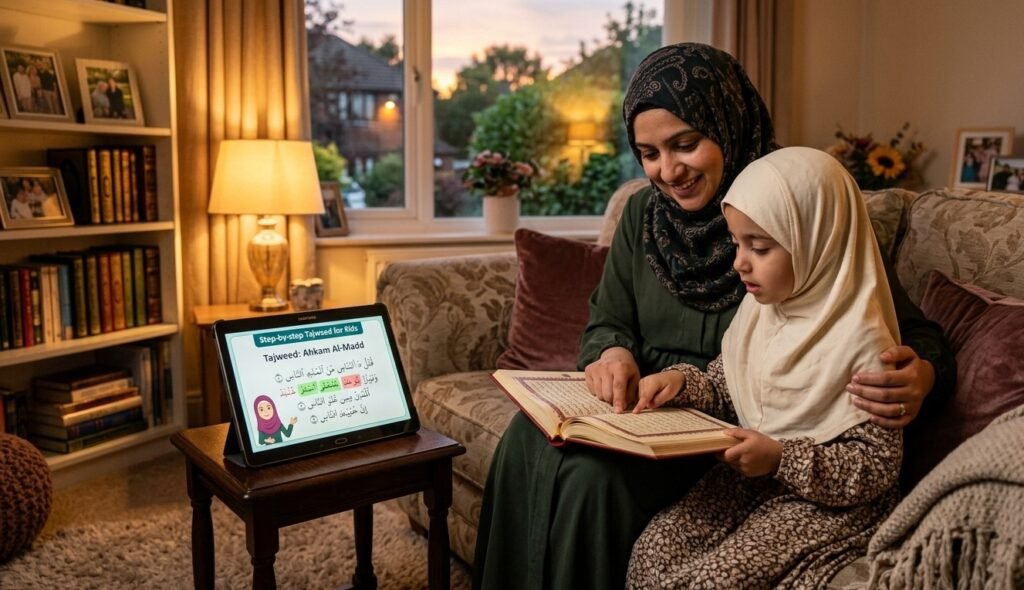
They Prevent Unrealistic Expectations
One common mistake is expecting a child to memorize large portions before mastering reading.
Experienced teachers often notice that students who rush past Noorani Qaida struggle later with Makhraj correction and Tajweed application.
Strong foundations save time in the long run.
They Help Parents Track Progress
Instead of asking, “Is my child behind?” ask:
- Can they recognize Arabic letters?
- Can they pronounce letters correctly?
- Can they read independently?
- Can they apply Tajweed rules?
These questions provide a clearer picture of progress.
They Build Confidence
Children feel encouraged when they achieve small goals regularly.
Completing Noorani Qaida, reading a short surah independently, or mastering a Tajweed rule can create positive momentum.
They Support Long-Term Success
At Al Hamd Islamic Center, teachers follow the Al Hamd Quran Learning System. This structured approach helps students master one stage before moving to the next.
The goal is not speed.
The goal is accuracy, confidence, and love for the Quran.
Quran Learning by Age: A Complete Milestone Framework
Every child is unique. These milestones are general guidelines rather than strict rules.
Parents should use them as benchmarks, not pressure points.
Ages 3-4: Building Love for the Quran
At this stage, children learn primarily through listening and imitation.
Key goals include:
- Listening to Quran daily
- Learning short duas
- Recognizing common Islamic phrases
- Developing positive feelings toward Quran learning
A simple ten-minute routine often works better than long lessons.
Ages 5-6: Beginning Noorani Qaida
This stage focuses on foundational reading skills.
Children typically begin:
- Learning Arabic letters
- Recognizing letter shapes
- Practicing pronunciation
- Following basic lesson routines
Sadiq ur Rehman, a Dars-e-Nizami graduate from Jamia Faridia Islamabad with specialization in Tajweed and Qirat-e-Sabah, often observes that students who master letter sounds early usually progress more smoothly in Quran reading.
Ages 7-8: Developing Reading Skills
Children become more independent during this stage.
Important goals include:
- Reading connected letters
- Identifying short vowels
- Applying basic Tajweed
- Reading short surahs independently
Consistency becomes especially important here.
Even three lessons per week can produce excellent results when combined with revision.
Ages 9-10: Strengthening Reading Fluency
At this age, many children begin reading the Quran with greater confidence.
Typical goals include:
- Improving reading speed without sacrificing accuracy
- Applying Tajweed rules consistently
- Strengthening Makhraj pronunciation
- Expanding memorization targets
This is often the stage where parents notice major progress.
Children begin sounding less hesitant and more natural in their recitation. Mistakes still happen, but correction becomes easier because foundational skills are already established.
Ages 11-12: Developing Advanced Quran Skills
Older children can take greater ownership of their learning.
Goals may include:
- Consistent Tajweed implementation
- Larger Hifz objectives
- Understanding selected Quran meanings
- Establishing independent revision habits
Students who reach this stage with strong foundations usually find advanced learning much easier.
What Is the Best Age to Learn Quran?
The best age to learn Quran is generally between four and seven years old because children are highly receptive to language, repetition, and habit formation. However, meaningful Quran education can begin at any age when lessons match a child’s developmental stage and learning needs.
Many parents assume there is a perfect age.
In reality, readiness matters more than a number.
A motivated eight-year-old can progress quickly. Likewise, a younger child may need more time before structured lessons become effective.
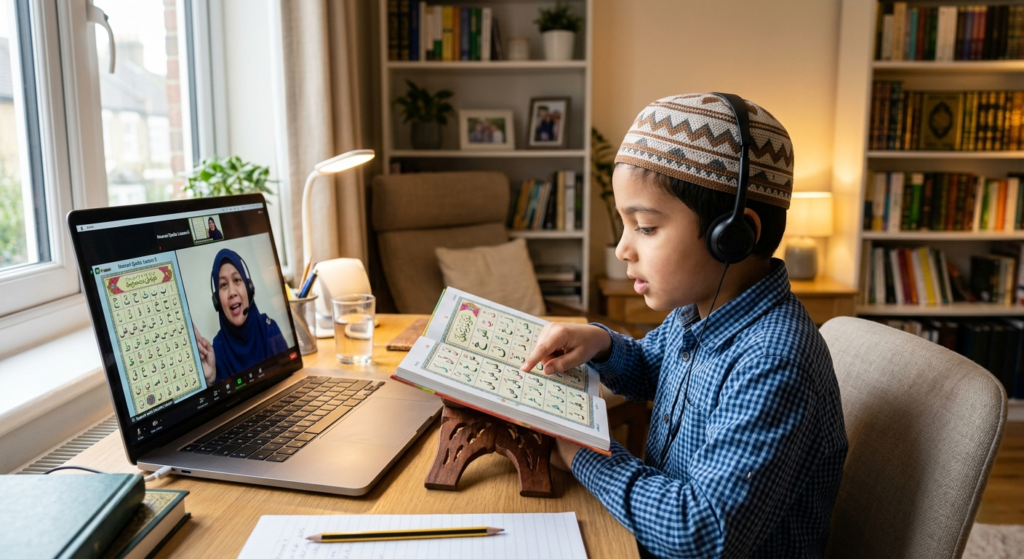
Signs Your Child Is Ready
Your child may be ready for regular Quran classes if they can:
- Follow simple instructions
- Focus for 15–20 minutes
- Recognize patterns and sounds
- Show curiosity about learning
These resources reinforce the importance of consistency, encouragement, and age-appropriate expectations.
Not sure whether your child is ready for structured Quran learning? A free trial class at Al Hamd Islamic Center includes an assessment with an experienced teacher and personalized recommendations based on your child’s age and skill level.
Quran Goals for Kids at Every Stage
Children need different goals as they grow.
The most effective goals focus on steady improvement rather than quick results.
Reading Goals
A child’s reading journey often follows this progression:
- Arabic letter recognition
- Letter combination practice
- Word reading
- Verse reading
- Fluent recitation
Each stage should be mastered before moving forward.
Tajweed Goals
Strong Tajweed begins with proper pronunciation.
Teachers focus on:
- Correct Makhraj articulation
- Proper elongation rules
- Accurate stopping points
- Consistent recitation habits
One common classroom observation is that students who skip pronunciation practice often require significant correction later.
Memorization Goals
Memorization should be realistic and sustainable.
A child who memorizes fewer surahs with strong retention often achieves better long-term results than one who memorizes quickly and forgets.
Islamic Knowledge Goals
Quran education should include more than reading.
Children benefit from learning:
- Daily supplications
- Basic Islamic Studies
- Salah fundamentals
- Islamic manners and character
Character Development Goals
The Quran shapes behavior as well as knowledge.
Parents frequently notice improvements in:
- Respect
- Patience
- Responsibility
- Self-discipline
These qualities often develop alongside regular Quran study.
Common Mistakes Parents Make During Child Quran Development
Many delays in Quran progress happen because of avoidable mistakes.
Understanding these challenges can help parents support their children more effectively.
Comparing Children to Others
Every child learns differently.
A child who learns slowly today may excel later. Comparing siblings or classmates often creates pressure and reduces confidence.
Instead, focus on your child’s individual growth.
Prioritizing Memorization Before Reading Accuracy
Many parents naturally become excited about Hifz.
However, experienced teachers recommend building strong reading skills first.
Children who develop proper Makhraj and Tajweed early usually memorize more accurately and retain lessons longer.
Inconsistent Study Routines
Long lessons once a week rarely produce strong results.
Most successful students follow a consistent schedule with regular revision.
Even fifteen minutes of daily practice can make a noticeable difference.
Learning From Unverified Sources
Parents often fear:
“What if my child learns incorrectly and develops bad habits?”
This concern is important.
Incorrect pronunciation can become deeply ingrained over time. Correcting those habits later may require significant effort.
Qualified teachers help prevent these issues before they become permanent.
What Parents Often Notice After Consistent Quran Learning
Positive changes usually appear gradually.
The transformation often becomes visible after several months of structured learning.
Improved Confidence
Children become more comfortable reading aloud.
They no longer hesitate over every word.
Stronger Connection to Salah
As recitation improves, children often become more engaged during prayer.
Understanding and familiarity increase their confidence.
Greater Love for the Quran
Children who experience positive lessons tend to view Quran study as a meaningful part of life rather than an obligation.
More Beautiful Recitation
Parents frequently notice smoother recitation.
Words flow more naturally. Tajweed becomes more consistent. Pronunciation sounds clearer and more confident.
This is often one of the most rewarding milestones for families.
Why Qualified Teachers Make a Difference
A qualified teacher does more than correct mistakes.
They guide a child through a structured educational journey.
At Al Hamd Islamic Center, teachers use the Al Hamd Assessment Framework to identify each student’s strengths, weaknesses, and next learning goals.
Structured Assessment
Students receive placement based on their actual abilities rather than age alone.
This prevents frustration and unnecessary gaps.
Step-by-Step Progression
Lessons follow a structured sequence:
- Noorani Qaida
- Letter pronunciation
- Makhraj correction
- Tajweed application
- Quran reading fluency
- Memorization and revision
Regular Revision
Revision remains a central part of the learning process.
Teachers dedicate time to reviewing previous lessons before introducing new material.
This improves retention and confidence.
Personalized Support
Children progress at different speeds.
Qualified instructors adjust lesson pacing according to each student’s needs.
The Al Hamd Islamic Center Trust Stack
Al Hamd Islamic Center serves families across the USA, UK, Canada, Australia, and beyond through structured Quran education and qualified instructors.
Learn From Verified Ijazah-Certified Teachers
One of Al Hamd’s strongest advantages is its network of more than 200 qualified Quran teachers.
This includes:
- 100+ male instructors
- 20+ female instructors
- Verified Ijazah-certified teachers
- Hifz specialists
- Tajweed experts
Recognized Islamic Qualifications
Teacher credentials include respected Islamic institutions and certifications such as:
- Dars-e-Nizami
- Jamia Faridia Islamabad
- Jamia Darul Tafseer wal Hadees
- Qirat-e-Sabah specialization
- M.A. Islamiat
- Tanzeem ul Madaris certifications
- Advanced Arabic and Islamic Studies degrees
Meet Some of Al Hamd’s Qualified Teachers
Sadiq ur Rehman is a Dars-e-Nizami graduate from Jamia Faridia Islamabad with specialization in Tajweed and Qirat-e-Sabah. He has more than three years of teaching experience and focuses on pronunciation accuracy and foundational recitation skills.
Waseem Abbas studied at Jamia Darul Tafseer wal Hadees and specializes in Hifz instruction. With more than four years of experience, he helps students strengthen memorization while maintaining recitation quality.
Komal Kiani holds Tajweed certification through the Tanzeem ul Madaris Board and has training in Tafseer. She helps students develop both accurate recitation and meaningful understanding.
Sidra Zulfiqar holds double Master’s degrees in Arabic and Islamic Studies from Jamia Zia-ul-Uloom. Her expertise supports structured Quran and language development programs.
Child Safety and Supervision
Parents want more than academic progress.
They want peace of mind.
Al Hamd Islamic Center maintains:
- Monitored classes
- Teacher supervision systems
- Professional standards
- Regular quality reviews
Parent Progress Updates
Families receive:
- Ongoing assessments
- Progress tracking
- Learning recommendations
- Milestone reports
Parents always know how their child is progressing and what comes next.
Free Trial Class
The free trial class serves as a risk-free starting point.
Families can:
- Meet a qualified teacher
- Evaluate teaching style
- Assess their child’s current level
- Receive personalized guidance
There is no pressure and no long-term commitment required to explore whether the program is a good fit.
Frequently Asked Questions
Quran learning milestones are age-appropriate benchmarks that help parents monitor a child’s development in Quran education. These milestones include listening skills, letter recognition, Noorani Qaida progress, Tajweed application, reading fluency, memorization, and understanding. They provide realistic expectations and clear learning goals.
Most children benefit from beginning structured Quran education between ages four and seven. During these years, children are highly receptive to language learning and habit formation. However, successful Quran learning can begin at any age when instruction matches the child’s readiness and abilities.
There is no universal memorization target. Some children may complete several juz while others focus on reading fluency and Tajweed. The most important factor is consistent progress, accurate recitation, and strong retention rather than comparing one child’s achievements with another’s.
Yes. Many children thrive in one-on-one online Quran classes because they receive individualized attention and flexible scheduling. Success depends on qualified teachers, structured lesson plans, regular revision, and active parental support throughout the learning process.
Most students benefit from attending classes two to five times per week. Consistency matters more than intensity. Short, regular lessons combined with revision at home usually produce stronger long-term results than irregular study schedules.
Conclusion
Understanding Quran learning milestones helps parents replace uncertainty with confidence.
Rather than worrying about comparisons, you can focus on steady growth, strong foundations, and meaningful progress. Children learn best when goals match their developmental stage and when qualified teachers guide them step by step.
The journey begins with proper pronunciation, grows through Tajweed and reading fluency, and develops into a lifelong connection with the Quran.
Al Hamd Islamic Center supports families through experienced Ijazah-certified teachers, structured learning systems, and personalized guidance. Whether your child is just beginning Noorani Qaida or working toward advanced recitation, the right support can make a lasting difference.