



A female Quran teacher for kids online in the USA is a trained teacher who guides children to read the Qur’an with correct Tajweed through live, supervised classes. These sessions are designed to be safe, structured, and suitable for young learners.
Choosing the Right Female Quran Tutor for Kids Online in USA
Choosing a female Quran teacher is not just about lessons. It is about trust, safety, and how your child feels during every session.
Many parents worry about who is behind the screen. They also worry about teaching quality and long-term consistency. These concerns are valid and should guide your decision.
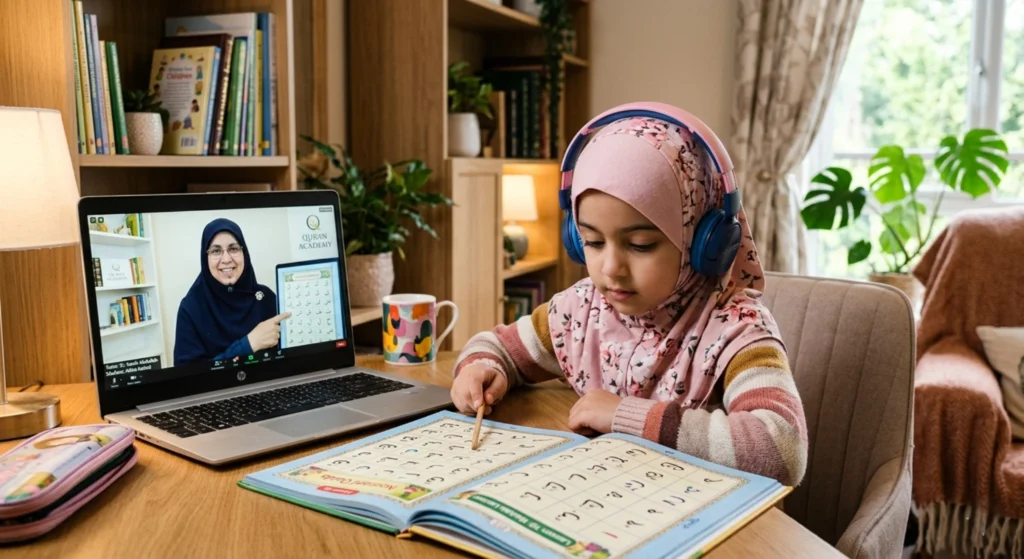
Why This Matters for Your Child
A child’s first learning experience shapes their attitude for years. A calm and patient teacher builds confidence. A poor match can create stress or disinterest.
Parents often notice small signs early:
- The child avoids class time
- They lose focus quickly
- They feel unsure while reading
These signals point to the teaching approach, not the child’s ability.
How Online Quran Classes Work (Step-by-Step)
Most structured programs follow a clear path.
- Start with a trial class to assess level
- Begin with basics using Noorani Qaida
- Move into pronunciation with Tajweed
- Build fluency through guided reading
- Optionally begin Hifz
Classes are usually one-on-one. Sessions stay short to match a child’s attention span. Consistency matters more than duration.
Who This Is For
- Parents in the USA with children aged 4–15
- Families seeking a safe learning setup
- Beginners starting Quran reading
- Children who need gentle, patient teaching
- Parents who want supervised online education
What Makes a Female Tutor a Strong Choice
Many families prefer female teachers for younger children. This often leads to a more relaxed learning experience.
A strong tutor usually:
- Speaks clearly and patiently
- Builds trust through encouragement
- Adjusts to the child’s pace
- Maintains a calm learning environment
This approach helps children stay engaged and comfortable.
Key Benefits for Kids
- Focus improves in one-on-one sessions
- Pronunciation develops correctly from the start
- Lessons feel safe and predictable
- Schedules fit around school routines
- Parents stay involved in progress
These benefits support steady and lasting improvement.
Safe vs Risky Tutor Comparison
| Factor | Safe Tutor | Risky Tutor |
|---|---|---|
| Identity | Verified | Unknown |
| Trial class | Always available | Not offered |
| Parent access | Open anytime | Restricted |
| Lesson plan | Structured | Unclear |
| Communication | Consistent | Irregular |
This difference becomes clear within a few sessions.
How to Choose the Right Tutor
Start with observation, not assumptions.
- Book a trial class first
- Watch how the teacher interacts
- Notice tone, patience, and clarity
- Ask about lesson structure
- Confirm you can monitor sessions
Your child’s reaction after class is a key signal. Comfort leads to better learning.
Common Mistakes to Avoid
Many parents make quick decisions. This often leads to poor results.
Avoid:
- Choosing based on price alone
- Skipping the trial class
- Ignoring communication style
- Not checking safety policies
- Leaving the child unsupervised early
Taking a little more time prevents long-term issues.
Trust Stack: What to Look For
Teacher Qualifications
A reliable tutor should:
- Understand Tajweed clearly
- Have experience with children
- Follow a structured teaching method
Strong teaching matters more than titles alone.
Safety Measures
Safety must be clear and visible.
- Verified teacher identity
- Secure platforms for classes
- No private communication outside sessions
- Clear parent access at all times
If these are missing, reconsider the option.
Supervision Clarity
You should always have visibility.
- Join or observe sessions anytime
- Communicate openly with the teacher
- Stay informed without barriers
Transparency builds long-term trust.
Curriculum Structure
A clear path keeps learning steady.
- Beginner: Noorani Qaida and basics
- Intermediate: reading with Tajweed
- Advanced: fluent recitation and memorization
Structured learning prevents confusion.
Progress Tracking
Progress should never feel unclear.
- Regular feedback from the teacher
- Defined learning milestones
- Honest updates on strengths and gaps
This helps you guide your child effectively.
What Great Tutors Do Differently
Some tutors simply teach. Others truly connect.
A great tutor:
- Adjusts instantly to the child’s pace
- Keeps sessions interactive
- Encourages without pressure
- Builds confidence step by step
These small actions create meaningful progress.
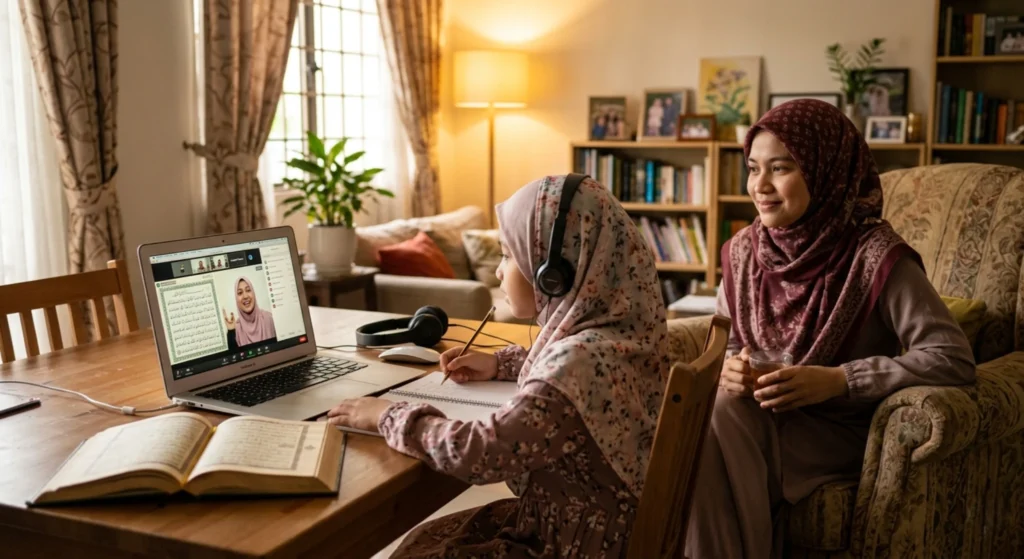
How to Choose Safely
Choose a tutor with verified identity, clear teaching structure, and strong communication. Always begin with a trial class. Ensure you can monitor sessions and observe how your child responds.
Are Online Quran Classes Safe?
Online classes are safe when teachers are verified, sessions are supervised, and secure platforms are used. Avoid tutors who limit access or lack transparency.
Addressing Parent Concerns
Parents often ask if online learning works for young children. It does, when sessions are short and engaging.
Another concern is discipline. A skilled teacher maintains focus through gentle guidance, not pressure.
Safety concerns are valid. Clear policies and parent access solve most of these issues.
What Progress Looks Like
With the right tutor, changes appear quickly.
- The child reads with more confidence
- Mistakes reduce over time
- Interest in learning increases
- The child participates actively
These signs show healthy progress.
Gentle Steps Matter alot
Start with a simple step. Book a trial class and just observe carefully.
Watch how your child feels during and after the session. That experience will guide your decision better than anything else.
Final Thoughts
Choosing a female Quran tutor for kids online in USA requires careful attention. Focus on safety, structure, and your child’s comfort.
When these factors align, learning becomes smooth and meaningful. Your child builds a strong connection with the Quran and gains confidence step by step.
Take the first step with a trial. Observe closely, then move forward with clarity.