



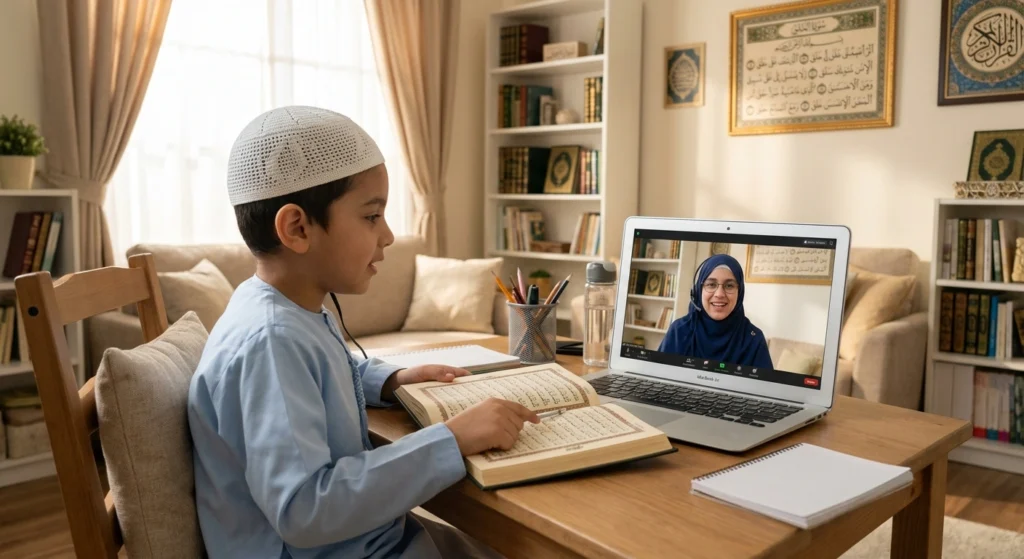
Most students learn basic Quran reading with Tajweed within 3-6 months, while fluent recitation typically takes 6-12 months. The exact timeline depends on age, consistency, teacher guidance, practice habits, and starting level. Students who begin with Noorani Qaida and follow a structured learning plan often progress faster and with fewer mistakes.
Many parents ask this question before enrolling their children in Quran classes. Adults often wonder the same thing when starting their own learning journey.
The truth is that there is no single timeline that fits everyone. However, there are clear patterns that experienced Quran teachers see again and again.
A student who receives regular guidance, attends classes consistently, and practices at home will usually progress much faster than someone who studies only occasionally.
At Alhamd Islamic Center, we have worked with students from the USA, UK, Canada, Australia, and many other countries. One lesson remains consistent: steady progress beats rushed learning every time.
Why Learning Quran With Tajweed Matters
Reading the Qur’an correctly is about more than pronunciation.
Tajweed helps preserve the way the Quran was revealed. It teaches students how to pronounce each letter correctly and recite verses with clarity and confidence.
For children, learning proper recitation early prevents mistakes from becoming habits.
For adults, Tajweed often creates a deeper connection with Salah and Quran recitation.
Many students discover that once they begin reading correctly, they enjoy learning much more.
Can You Learn Tajweed in 3 Months?
Yes. Many students can learn the basic rules of Tajweed within three months when attending regular classes and practicing consistently. However, developing fluent recitation and applying those rules naturally usually takes additional months of guided practice.
The goal should not be to finish quickly.
The goal should be to build a strong foundation that lasts for life.
Who Is This Guide For?
This guide is designed for:
- Parents looking for Quran classes for kids
- Adults learning Quran for the first time
- Reverts beginning their Quran journey
- Students improving their recitation
- Learners preparing for Hifz
- Families searching for qualified Quran teachers online
Whether a student starts from zero or already reads Arabic, understanding the learning process helps set realistic expectations.
The Quran Learning Roadmap
Most students follow a similar path:
Noorani Qaida → Quran Reading → Tajweed Application → Fluent Recitation → Hifz (Optional)
Each stage builds upon the previous one.
Students who rush through early stages often need extra correction later.
That is why experienced teachers focus on strong foundations before moving forward.
How Long Does It Take to Learn Quran With Tajweed?
Typical Learning Timeline
| Student Type | Weekly Classes | Estimated Timeline | Expected Outcome |
|---|---|---|---|
| Complete Beginner Child | 3–5 | 6–12 Months | Strong Quran Reading |
| Child With Basic Arabic Knowledge | 3–5 | 4–8 Months | Confident Tajweed Reading |
| Adult Beginner | 2–4 | 6–12 Months | Fluent Quran Recitation |
| Existing Quran Reader | 2–3 | 3–6 Months | Improved Tajweed Accuracy |
| Future Hifz Student | 4–6 | Ongoing | Memorization With Strong Tajweed |
These estimates assume regular attendance and consistent revision.
Based on student progress observed at Alhamd Islamic Center, learners who attend classes regularly and revise daily often advance significantly faster than those who rely only on lesson time.
Stage 1: Learning Arabic Letters
Every Quran journey begins with recognizing Arabic letters and learning their correct sounds.
This stage may seem simple, but it forms the foundation of everything that follows.
Teachers focus on pronunciation from the very beginning.
A child who learns the correct sounds early usually faces fewer challenges later.
Many beginners complete this stage within a few weeks.
Stage 2: Noorani Qaida
The Noorani Qaida is one of the most effective tools for building reading skills.
Students learn:
- Letter connections
- Vowel sounds
- Word formation
- Pronunciation practice
- Reading fluency
Students who complete a structured Noorani Qaida course often transition into Quran reading more smoothly.
One common mistake is rushing through this stage.
Strong Qaida skills save months of correction later.
Related Learning Path
Students who complete Noorani Qaida often move naturally into:
- Learn Quran Online programs
- Quran Reading Classes
- Online Tajweed Courses
- Hifz Preparation Programs
Stage 3: Learning Tajweed Rules
After students can read comfortably, they begin learning Tajweed.
This includes:
- Makharij (points of articulation)
- Ghunnah
- Madd rules
- Noon Sakinah rules
- Meem Sakinah rules
Learning the rules is only the first step.
Applying them correctly during recitation requires guided practice and repetition.
This is where qualified Quran teachers make a significant difference.
Stage 4: Guided Quran Reading
Many students experience their biggest improvements during this stage.
Teachers listen carefully and correct mistakes immediately.
Parents sometimes worry when teachers stop students frequently.
In reality, correction is a sign of quality instruction.
Every correction helps prevent future mistakes.
Over time, students become more confident and need less guidance.
Stage 5: Developing Fluency
Fluency takes time.
A student may understand Tajweed rules yet still need practice applying them naturally.
Fluent recitation develops through:
- Daily revision
- Teacher feedback
- Consistent class attendance
- Listening to proper recitation
- Regular reading practice
This stage transforms knowledge into habit.
What Makes Some Students Learn Faster?
Several factors affect the Quran learning timeline.
Teacher Quality
A skilled Quran teacher identifies weaknesses quickly and provides targeted correction.
Students often progress faster when learning through one-on-one Quran lessons online.
Consistency
Three classes every week generally produce better results than irregular study sessions.
Consistency is often more important than intelligence.
Daily Revision
Even ten to fifteen minutes each day can dramatically improve retention.
Small efforts repeated regularly create long-term success.
Personalized Instruction
Individual attention helps students overcome challenges faster.
This is one reason many families prefer online Quran classes with dedicated teachers.
How Parents Can Help Children Learn Quran Faster
Parents play an important role in a child’s success.

Simple habits often make a significant difference.
Establish a Consistent Schedule
Children learn best when classes occur at predictable times.
Encourage Daily Revision
Short review sessions reinforce classroom learning.
Create a Distraction-Free Environment
A quiet study space improves focus and retention.
Listen to Quran Together
Hearing correct recitation strengthens familiarity with Quranic sounds.
Celebrate Small Milestones
Progress feels more rewarding when achievements are recognized.
Students who receive encouragement at home often stay motivated longer.
Common Parent Concerns
“My Child Has No Previous Knowledge”
This is completely normal.
Many successful students begin without any Arabic background.
A structured curriculum is designed to guide beginners step by step.
“My Child Gets Distracted Easily”
Experienced teachers know how to keep younger students engaged through interactive lessons and gradual progression.
“Will Online Quran Classes Work?”
Yes.
Many families find online Quran classes more effective because students receive focused one-on-one attention.
“What If We Fall Behind?”
Learning is not always linear.
Consistent effort matters more than temporary setbacks.
How Alhamd Islamic Center Helps Students Learn Faster
Not all Quran programs follow the same teaching approach.
At Alhamd Islamic Center, students benefit from:
One-on-One Quran Classes
Personalized instruction allows teachers to focus on individual strengths and weaknesses.
Qualified Male and Female Teachers
Families can choose qualified male teachers and female teachers based on their preferences and learning needs.
Structured Noorani Qaida Curriculum
Students build strong foundations before advancing.
Tajweed Specialists
Teachers focus on correct pronunciation and practical application.
Progress Tracking
Regular assessments help students and parents monitor development.
Flexible Scheduling
Families across different time zones can find convenient class times.
Free Trial Class
Students can experience the learning environment before making a commitment.
Benefits of Learning With Qualified Quran Teachers
Professional guidance offers advantages that self-study cannot easily provide.

Students receive:
- Immediate correction
- Personalized feedback
- Structured lesson plans
- Consistent motivation
- Faster skill development
- Better Tajweed retention
- Clear learning milestones
Many students gain confidence long before achieving full fluency.
That confidence often becomes the key to long-term success.
What Is the Fastest Way to Learn Quran With Tajweed?
The fastest way to learn Quran with Tajweed is through regular lessons with a qualified teacher, daily revision, and a structured curriculum. Students who receive immediate feedback and follow a clear learning plan typically progress much faster than those learning independently.
Common Mistakes to Avoid
Rushing Through Noorani Qaida
Strong foundations save time later.
Ignoring Daily Revision
Learning without review slows progress.
Focusing Only on Speed
Accuracy should come before fluency.
Learning Without Feedback
Students often repeat mistakes they cannot hear themselves.
Comparing Progress With Others
Every learner develops at a different pace.
Consistent improvement matters more than comparison.
Frequently Asked Questions
Most students need between three and twelve months depending on their experience, consistency, and goals.
Most beginners complete Noorani Qaida within two to four months.
Yes. Adults regularly achieve excellent results through structured guidance and consistent practice.
Most students benefit from two to five classes each week combined with daily revision.
Yes. One-on-one online Quran classes often provide focused instruction and flexible scheduling.
Some rules can be learned independently, but qualified teacher feedback remains essential for accurate pronunciation.
Start With a Free Quran Assessment
Choosing the right Quran program can feel overwhelming.
A free assessment removes much of that uncertainty.
During the assessment, students can:
- Identify their current reading level
- Meet a qualified Quran teacher
- Receive a personalized learning plan
- Understand realistic learning timelines
- Experience a trial lesson with no obligation
This helps families make informed decisions with confidence.
Conclusion
If you are wondering how long does it take to learn Quran with Tajweed, the answer depends on where the student begins and how consistently they practice.
Most learners develop basic Tajweed skills within three to six months. Fluent Quran recitation often takes six to twelve months of steady effort and qualified guidance.
The journey is not about speed alone.
It is about building the ability to recite the Qur’an correctly, confidently, and beautifully for the rest of one’s life.
With strong foundations in Noorani Qaida, proper Tajweed, experienced teachers, and regular practice, students can make remarkable progress and prepare themselves for future goals such as advanced recitation or Hifz.
The best way to discover a student’s personal timeline is to begin with a free assessment and take the first step today.