



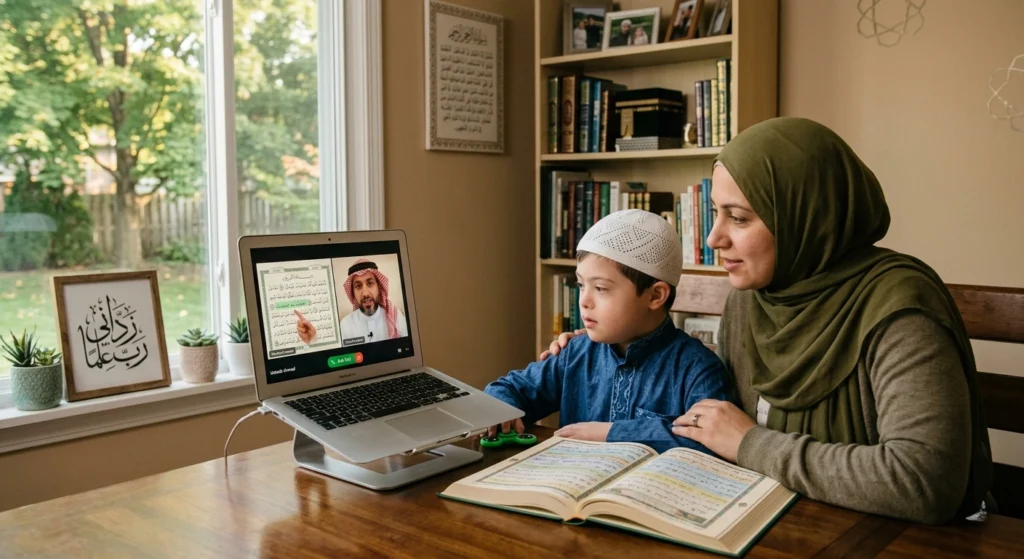
Many Muslim parents quietly wonder if their child will ever feel comfortable learning the Qur’an. Some children struggle in fast-paced classrooms. Others become overwhelmed by noise, pressure, or constant correction. That does not mean they cannot succeed in Islamic learning.
Specialized online Quran classes for children with special needs create a calmer and more supportive experience. These lessons are designed for autistic children, ADHD students, sensitive learners, and kids who need extra patience or structure. Instead of forcing every child into one method, the teacher adapts the lesson around the student.
Specialized online Quran classes for children with special needs use personalized teaching, flexible pacing, visual support, and one-on-one instruction to help neurodivergent students learn comfortably while building confidence and connection with Islamic education.
For many families in the USA, online Quran learning also removes daily stress. Children can study from home without crowded classrooms, travel pressure, or fear of embarrassment.
Who These Specialized Quran Classes Help
Every child learns differently. Some students need shorter lessons. Some need repetition before they feel confident reading aloud. Others simply need a teacher who understands emotional regulation and attention struggles.
These classes often support:
- Children with autism spectrum disorder
- Students with ADHD
- Kids with speech or communication delays
- Sensitive learners who dislike group settings
- Children who struggle with traditional Quran schools
- Families looking for one-on-one Islamic learning
Parents sometimes assume slow progress means failure. In many cases, the teaching method simply does not match the child’s learning style.
Why Specialized Quran Learning Matters
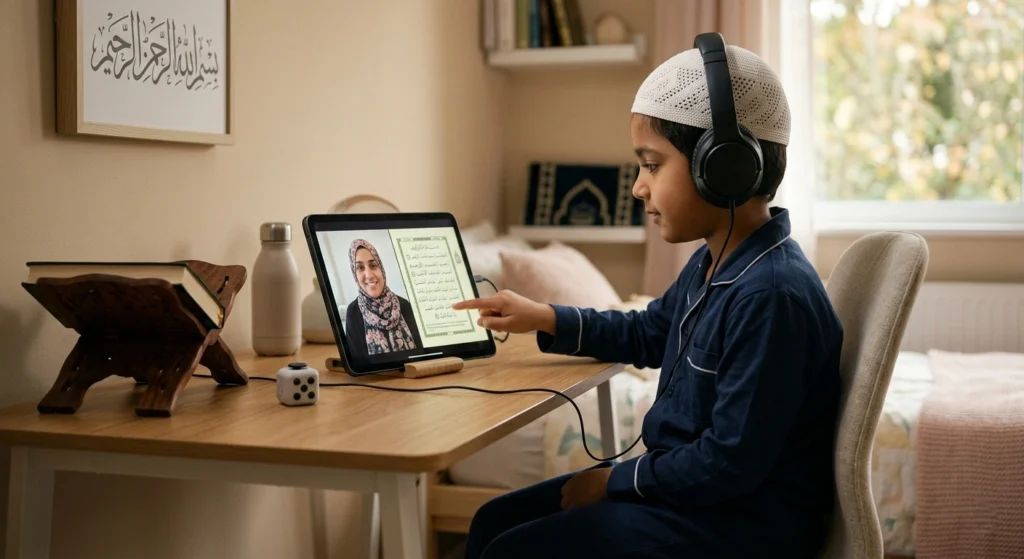
Islamic education should help children feel connected, safe, and encouraged. When lessons feel stressful every week, children may begin avoiding Quran learning completely.
That emotional reaction matters.
A supportive teacher changes the entire experience. Instead of correcting every mistake immediately, the teacher guides gently and adjusts the pace when attention drops. Small successes become part of the lesson.
Children often respond well when:
- Expectations feel realistic
- Lessons follow a routine
- Corrections stay calm
- Teachers praise effort
- Learning feels emotionally safe
This approach builds confidence slowly. Over time, many children become more willing to participate and practice independently.
Parents also notice practical improvements:
- Better concentration at home
- Less overstimulation
- More consistent attendance
- Reduced learning anxiety
- Easier communication with teachers
- Improved comfort during recitation
How Specialized Online Quran Classes Work
Most programs begin with a simple assessment. The teacher observes how the child responds during conversation, reading, and instruction. This first step helps create realistic goals.
The process usually follows four stages.
1. Understanding the Child’s Learning Style
Teachers look at:
- Attention span
- Communication comfort
- Sensory sensitivities
- Reading confidence
- Previous Quran experience
Some students respond better to visuals. Others learn more effectively through listening and repetition.
2. Creating a Personalized Learning Plan
Strong programs avoid a “one-size-fits-all” system.
The teacher may adjust:
- Session length
- Teaching pace
- Repetition methods
- Break timing
- Lesson structure
- Memorization goals
A child who struggles during a long group class may perform much better during a focused 20-minute session.
3. Teaching Through One-on-One Support
Many children begin with Noorani Qaida because its gradual structure helps students recognize Arabic letters comfortably.
As confidence improves, teachers introduce:
- Basic Quran reading
- Pronunciation correction
- Simple Tajweed rules
- Memorization exercises
- Listening repetition
Some students later move toward Hifz goals through short and consistent routines.
4. Keeping Parents Informed
Communication matters deeply in special-needs education.
Good Quran academies often provide:
- Weekly updates
- Learning milestones
- Participation feedback
- Practice recommendations
- Behavioral observations
This helps parents feel included without creating extra pressure for the child.
Benefits of Specialized Online Quran Classes for Children with Special Needs
Children often make stronger progress when lessons match their emotional and educational needs.
Key Benefits
- Personalized teaching pace
- One-on-one teacher attention
- Reduced anxiety during lessons
- Better focus from home
- Flexible schedules for busy families
- Gentler correction methods
- Improved confidence over time
- Easier parent involvement
- More predictable learning routines
- Stronger emotional comfort
One overlooked benefit is energy management. Some neurodivergent children become mentally tired quickly. Experienced teachers recognize those signs early and adjust before frustration grows.
Traditional Quran Classes vs Specialized Online Quran Classes
| Traditional Quran Classes | Specialized Online Quran Classes |
|---|---|
| Group learning environment | One-on-one support |
| Fixed lesson pace | Personalized pacing |
| Busy classroom setting | Calm home environment |
| Standard teaching style | Adaptive instruction methods |
| Limited scheduling flexibility | Flexible lesson times |
| Less parent visibility | Ongoing parent communication |
| Same curriculum for all students | Customized learning plans |
Traditional classes work well for many students. However, some children need a quieter and more flexible environment to succeed.
Teaching Methods That Help Neurodivergent Students Learn Better
Experienced teachers constantly adjust based on the child’s reactions. They understand that attention, confidence, and emotional comfort directly affect learning.
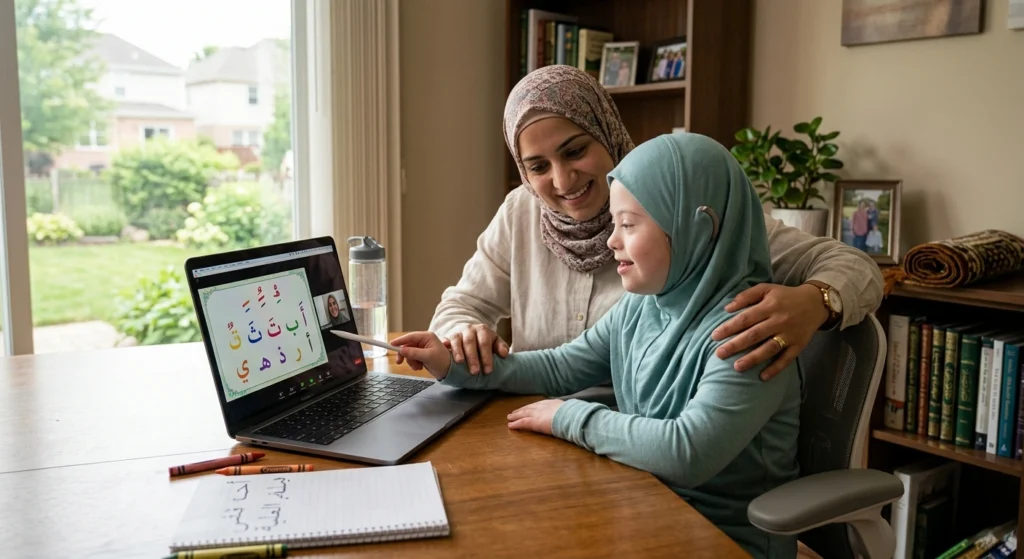
Visual Learning Support
Some students process information more clearly through visual tools.
Teachers may use:
- Color highlighting
- Screen sharing
- Letter tracing
- Visual repetition
- Simple reading patterns
These methods help reduce confusion during early Quran reading.
Repetition Without Pressure
Repetition helps many children feel familiar with Arabic sounds and recitation patterns. The tone of repetition matters just as much as the repetition itself.
Calm repetition builds confidence. Harsh repetition often creates emotional shutdown.
Short and Focused Lessons
Many special-needs students focus better during shorter sessions with clear transitions. A calm 25-minute lesson can be far more effective than an exhausting one-hour class.
Positive Reinforcement
Children respond strongly to encouragement.
Good teachers celebrate:
- Small pronunciation improvements
- Better focus
- Consistent attendance
- Increased participation
- Memorization effort
Those small moments build long-term confidence.
Addressing Common Parent Fears
Many parents worry their child may never connect with the Qur’an. Others fear teachers will misunderstand emotional behavior or attention struggles.
These fears are understandable.
Specialized Quran learning focuses on progress, not comparison. Children do not need to learn at the same speed as others to build a meaningful Islamic connection.
Experienced teachers understand:
- Emotional shutdowns
- Attention fluctuations
- Sensory overload
- Slow processing speed
- Communication differences
That understanding changes the learning environment completely.
Many autistic and ADHD students learn Quran successfully when lessons are personalized, structured, shorter, and designed around the child’s learning style instead of rigid classroom expectations.
Parents also ask about online safety. Reliable Quran academies usually provide:
- Secure virtual classrooms
- Parent supervision options
- Transparent scheduling
- Professional teacher conduct
- Progress tracking systems
These safeguards help families feel more comfortable before enrollment.
What Makes a Good Specialized Quran Teacher?
Not every Quran teacher understands neurodivergent learning needs. Strong recitation skills matter, but patience and adaptability matter equally.
A strong teacher:
- Notices emotional changes quickly
- Adjusts pacing naturally
- Gives simple instructions
- Avoids overwhelming correction
- Builds trust slowly
- Encourages effort consistently
Children often learn best from teachers who remain calm during difficult moments.
That emotional steadiness creates safety and trust.
What Makes AlhamdOfficial Different
Many Quran academies use general promises like “qualified teachers” or “flexible schedules.” Families with special-needs children usually need more than that.
They need understanding.
AlhamdOfficial focuses on personalized Quran learning that respects emotional comfort, attention differences, and learning pace. Lessons are designed by Ijazah Certified Tutors to reduce pressure while building confidence steadily.
The approach includes:
- One-on-one instruction
- Flexible lesson pacing
- Calm correction methods
- Parent communication support
- Structured learning routines
- Patient teacher interaction
Families in the USA also benefit from flexible scheduling options that fit school, therapy, and family routines.
Common Mistakes Parents Should Avoid
Parents naturally want fast progress. However, certain habits can unintentionally increase pressure.
Comparing the Child to Others
Every child develops differently. Comparisons usually reduce confidence instead of improving performance.
Expecting Fast Memorization
Some students need more repetition before memorization feels comfortable. Slow progress does not mean failure.
Overloading the Schedule
Too many weekly sessions can create exhaustion and resistance. Consistency matters more than intensity.
Using Pressure-Based Motivation
Fear rarely creates long-term Quran engagement. Encouragement works far better.
Ignoring Emotional Fatigue
When children regularly become overwhelmed, the teaching approach may need adjustment.
Small changes in pacing often improve learning significantly.
How Parents Can Support Quran Learning at Home
Parents do not need to become full-time teachers. Small daily habits often make the biggest difference.
Helpful strategies include:
- Keeping lesson times consistent
- Creating a quiet learning space
- Praising effort instead of perfection
- Reducing distractions during class
- Staying calm after mistakes
- Communicating openly with teachers
Some children also focus better during certain hours of the day. Families often notice patterns after a few weeks.
Building Long-Term Confidence Through Islamic Learning
Confidence develops gradually. A child who once avoided Quran lessons may eventually begin reading willingly and participating comfortably.
That transformation usually begins with emotional safety first.
When children feel understood, they participate more openly. As participation improves, learning becomes easier. Over time, Islamic education becomes connected with comfort instead of stress.
For many families, the real goal is not only memorization. They want their child to feel included in Islam and connected to faith without fear or shame.
Specialized online Quran classes can help create that experience.
Are Online Quran Classes Better for Special-Needs Children?
Online Quran classes often work well for neurodivergent students because they reduce distractions, allow flexible pacing, and create a familiar home environment where children feel calmer and more emotionally secure during lessons.
Families in the USA also appreciate the flexibility. Parents often balance school schedules, therapy appointments, work responsibilities, and family commitments. Online learning fits more naturally into daily life.
FAQs
Specialized online Quran classes are personalized Islamic lessons designed for children with autism, ADHD, speech delays, or other learning differences using patient and adaptive teaching methods.
Yes, many autistic children learn Quran successfully through one-on-one online classes that use flexible pacing, calm instruction, and structured repetition.
Online Quran classes often help ADHD students because they reduce distractions and allow shorter, more focused learning sessions.
Helpful methods include visual learning, repetition, positive reinforcement, short lessons, and personalized teaching strategies.
Yes, many Quran academies allow parents to observe sessions and receive progress updates regularly.
Start With a Comfortable First Step
Parents do not need to commit immediately to a long-term program. A trial session often helps families understand whether the teaching style fits their child comfortably.
That first lesson can answer important questions:
- Does the child feel relaxed?
- Does the teacher communicate patiently?
- Is the pace manageable?
- Does the environment feel supportive?
Small details matter.
Many children who struggle in traditional classrooms become more engaged once lessons adapt to their actual needs instead of expecting them to adapt alone.
Specialized online Quran classes for children with special needs are not about lowering expectations. They are about creating a respectful learning path where children can grow with confidence, patience, dignity, and a meaningful connection to the Qur’an.