




This article shows practical steps, schedules, techniquess for Quran memorization online. It uses proven methods and keeps Tajweed and review central. Read for an actionable plan you can start today.
Why choose online Quran classes for memorization
Online Quran learning makes Hifz easy for busy adults and families. Classes fit time zones across the US, UK, Australia & Canada. They give access to qualified tutors, one-to-one correction, and digital tools that speed memorization. If you want flexible hours, tracked progress, and tajweed feedback, online Hifz classes are the efficient option.

Key benefits:
- Flexible class times and recorded sessions.
- One-to-one correction for Tajweed and pronunciation.
- Structured curriculum and measurable progress tracking.
- Digital audio for repetition anywhere.
Core principles before you start

Memorization without review fails. Build the plan around these pillars:
- Small, consistent portions. Short, regular sessions beat occasional long sessions.
- Daily revision. New material must be reviewed repeatedly the same day and across following days.
- Active listening + recitation. Hear, repeat, and write when possible. Tajweed must be applied from the first read.
- Accountability. A tutor, study partner, or recorded weekly test keeps progress honest.
- Healthy pacing, avoid burnout, quality of retention matters more than speed.
Effective techniques (practical methods)
1. The small-portion method (Lesson)
Break verses into 2–6 ayah chunks. Repeat the chunk until you can recite it without looking. Then attach the next chunk. This reduces cognitive overload and improves recall.
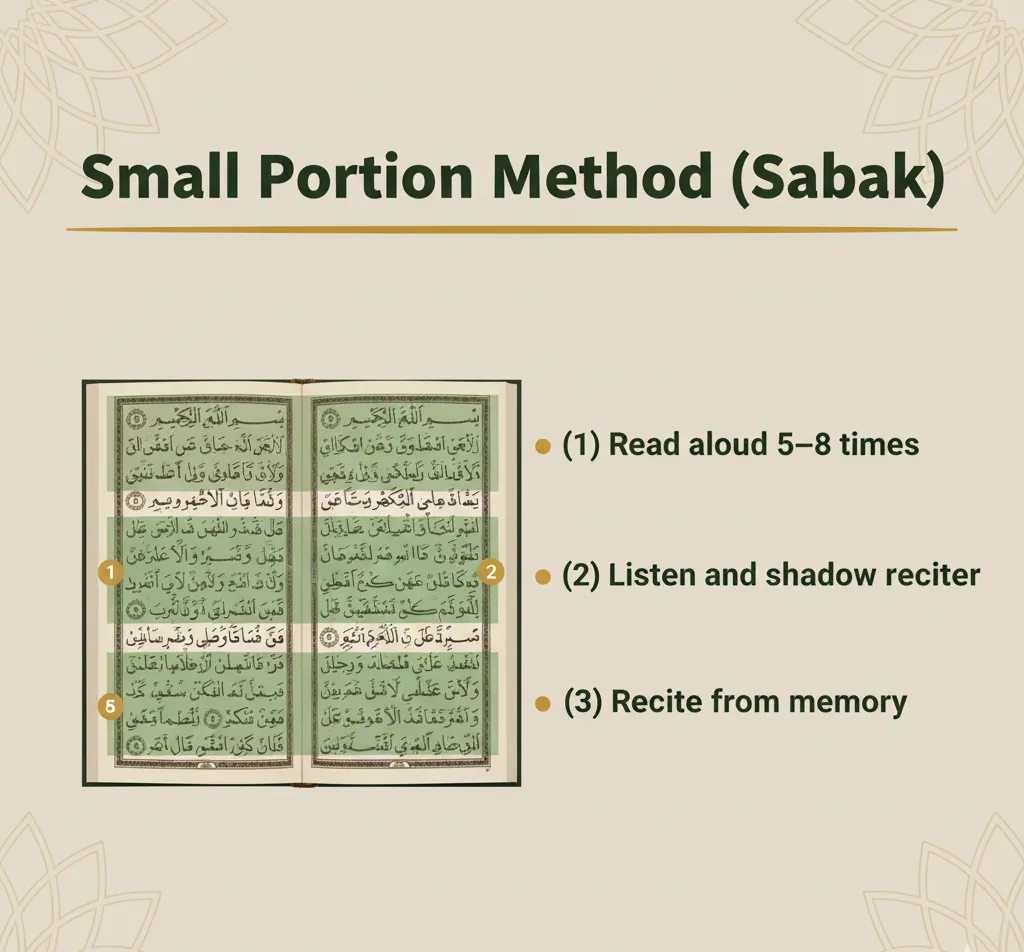
How to practice:
- Read the chunk aloud 5–8 times slowly.
- Listen to a qualified reciter and shadow (repeat immediately).
- Close the Mushaf and recite the chunk from memory.
2. Spaced repetition for long-term retention
Review of schedules on Day 1, and Day 3, Day 7, Day 14 and monthly. A simple tracker or spaced-repetition app should be used to mark weak passages.
3. Audio + visual pairing
Follow a printed or digital Mushaf while listening to a reliable reciter. Seeing the words while hearing them forms dual memory traces. Headphones reduce distractions.
4. Active recall and writing
Recite without looking. If stuck, write the first few words of the verse then continue by memory. Writing helps if you are a tactile learner.
5. Tajweed-first approach
Learn correct Tajweed rules for the parts you memorize. Small errors compound into bad habits. Immediate correction from an online Hifz teacher prevents fossilization.
6. Block review and cumulative revision (Sabqi/Manzil style)
Follow a daily revision block: today’s new portion, previous day’s portion, one medium revision of an earlier page, and a longer weekly revision from earlier juz. This balances new learning with maintenance.
Sample schedules you can adapt
Busy adult (20–40 minutes daily)
- 5 min warm-up recitation of known portions.
- 10–12 min new memorization (1–3 small chunks).
- 5 min immediate revision of the day’s new lesson.
- 5–10 min review of earlier material.
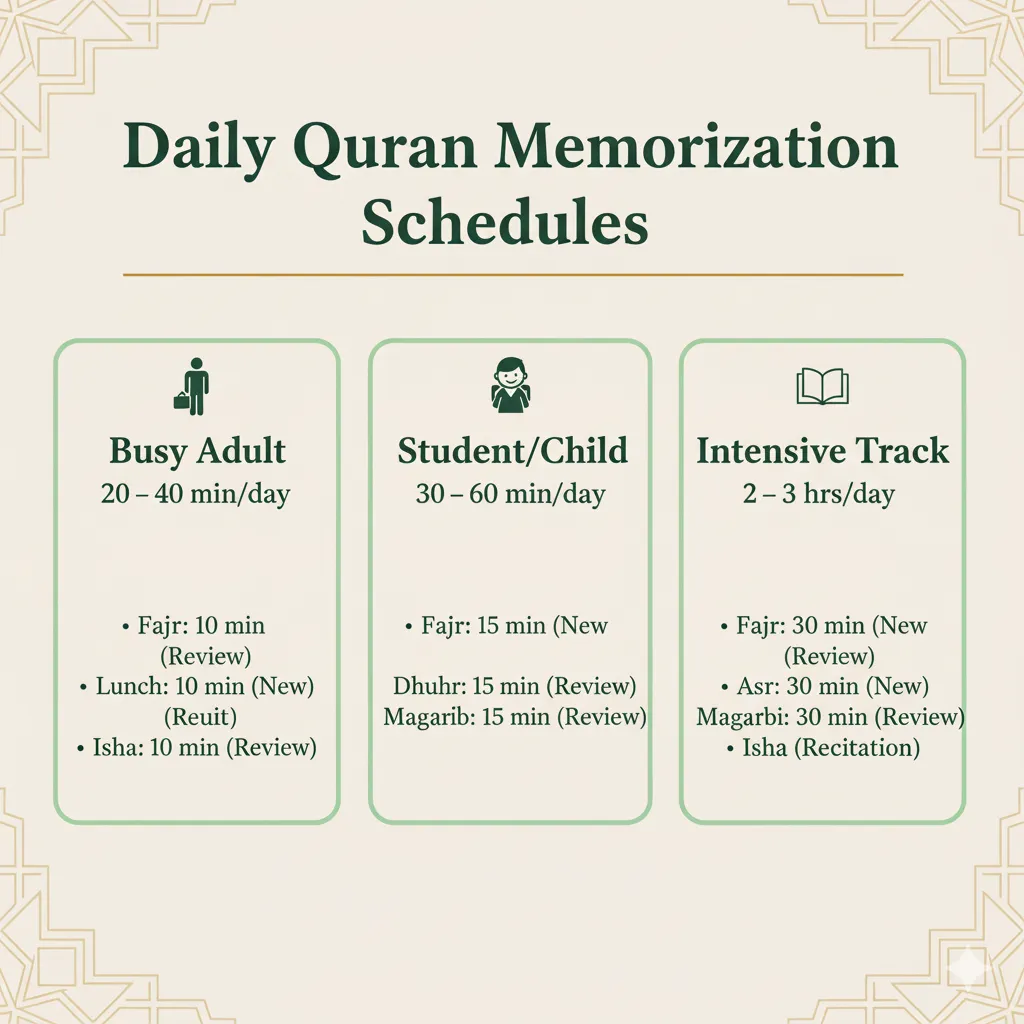
Student/child (30–60 minutes daily with breaks)
- 10–15 min review (previous days).
- 15–20 min new memorization in short bursts.
- 10–15 min supervised recitation with tutor and tajweed correction.
Intensive track (2–3 hours daily)
Use for accelerated Hifz programs. Alternate focused memorization blocks with frequent short revision. Include a weekly cumulative test with your tutor.
Role of tutors and classes
A competent online Hifz teacher provides:
- Immediate Tajweed correction.
- Structured program and realistic pacing.
- Oral testing and accountability.
- Feedback on pronunciation, pauses, and makhaarij.
Choose tutors who:
- Offer recorded sessions.
- Demonstrate experience with full Hifz training.
- Provide a clear revision plan and weekly assessments.
One-to-one lessons speed progress. Group classes offer community and lower cost. Combine both if possible.
Tools and apps that help
Look for platforms or tools that offer:
- High-quality audio from trusted reciters.
- Session recording and playback.
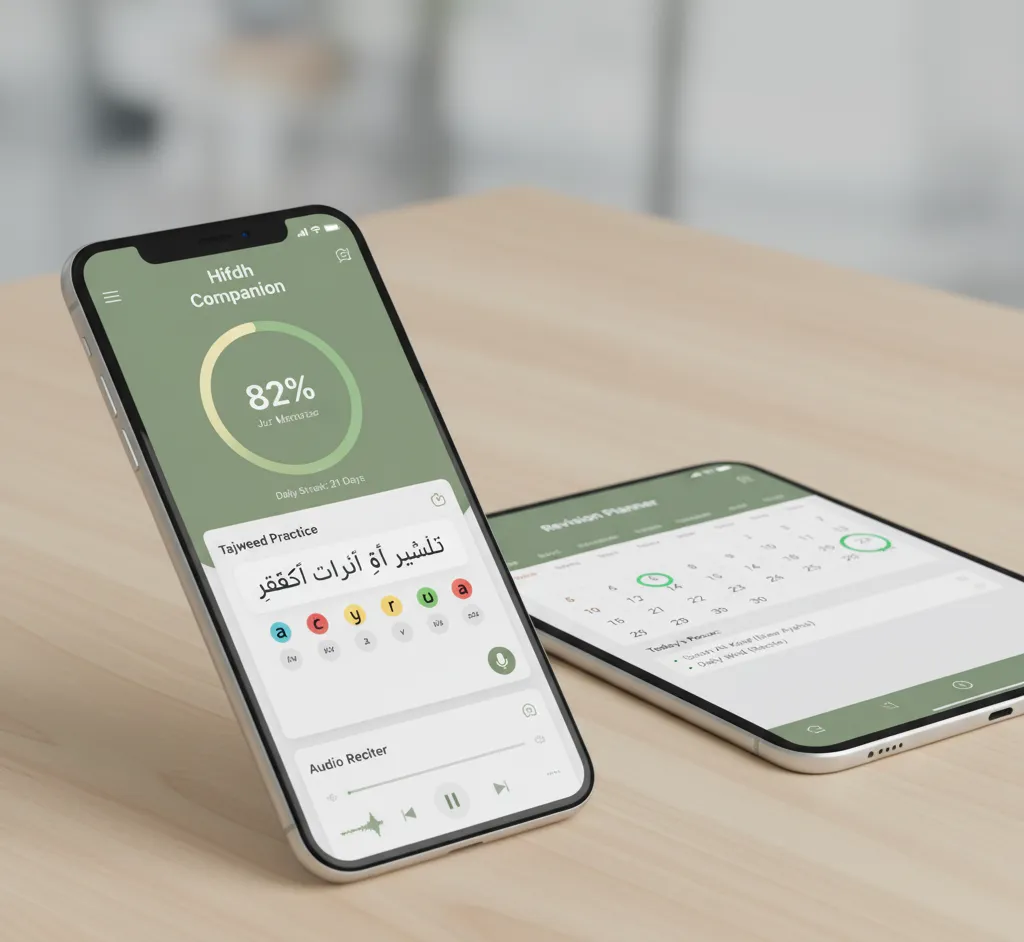
- Spaced-repetition or revision scheduling.
- Live tajweed correction tools (video/audio).
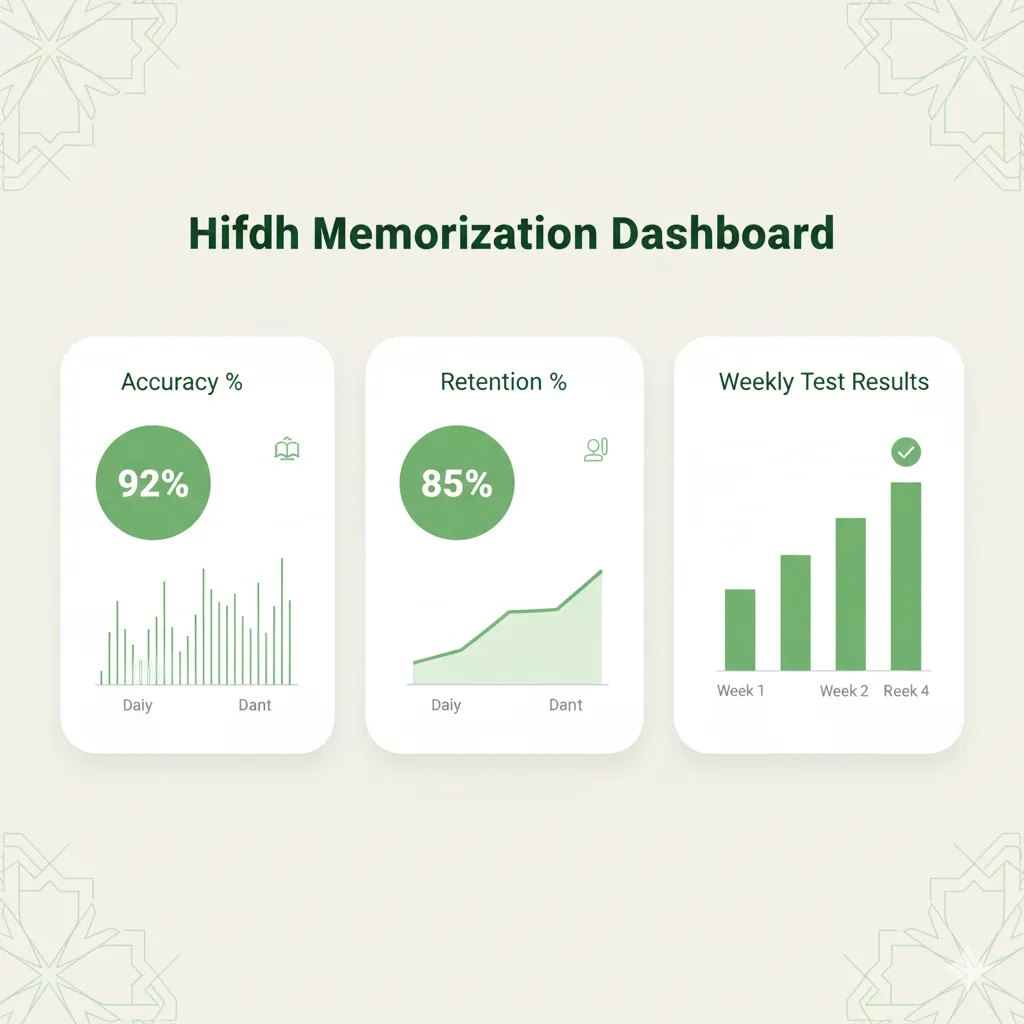
- Progress dashboards and certificates if you need them.
Do not rely solely on apps. They support but do not replace tutor feedback.
Common mistakes and how to avoid them
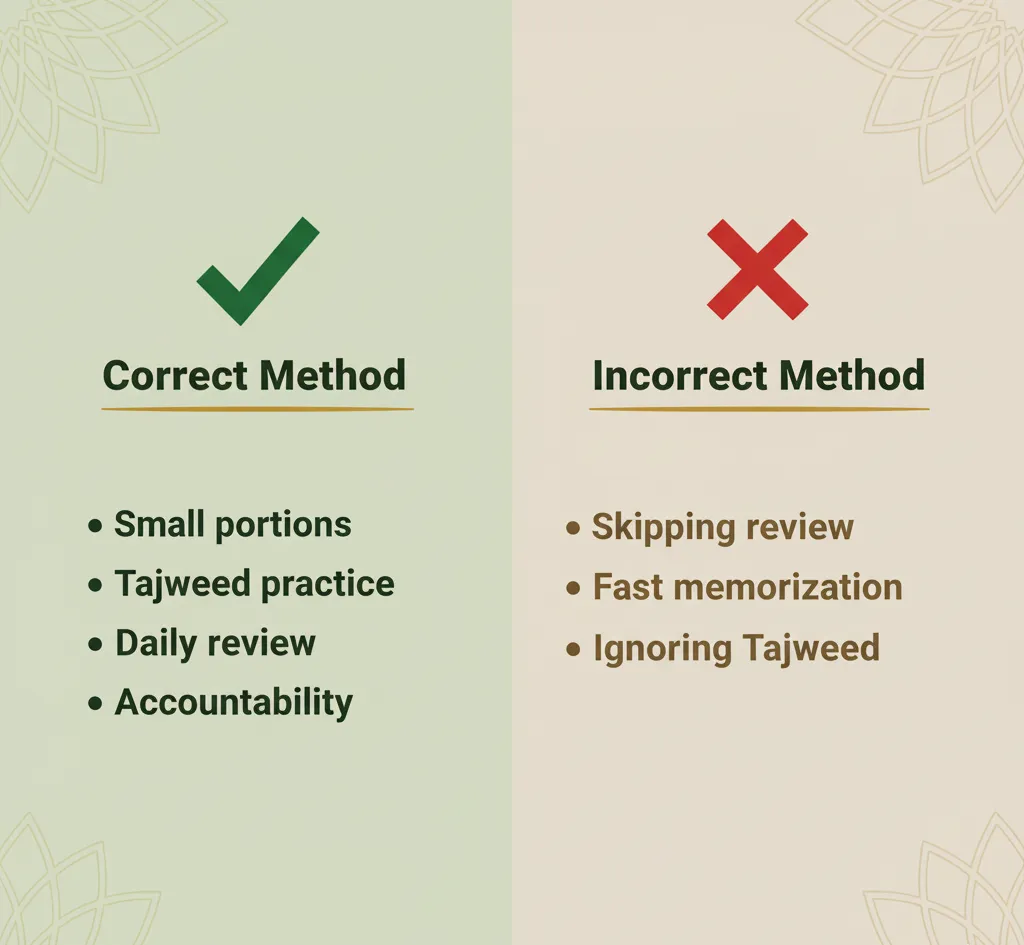
- Memorizing without immediate review. Fix: schedule same-day repetition.
- Ignoring Tajweed. Fix: insist on correction from first session.
- Overloading new material. Fix: smaller chunks and slower pace.
- Skipping accountability. Fix: weekly recitation tests, recorded videos, or tutor checks.
- Poor environment. Fix: quiet space, good headphones, stable internet.
Measuring progress and testing
Use measurable indicators:
- Number of verses retained without errors after one week.
- Percentage accuracy in weekly tutor test.
- Time taken to recite assigned pages without mistakes.
Record audio monthly. Compare improvements in tajweed and fluency. Adjust daily load based on retention metrics.
Guidance for parents and children
- Supervise short daily sessions.
- Use age-appropriate goals. For young children aim for consistent small gains.
- Choose female tutors if preferred for cultural fit.
- Foster positive reinforcement and avoid punishment for slow progress.

Time-zone and cultural notes for Learners
- Schedule lessons during early mornings, late evenings, or weekend windows that suit your local time zone.
- Use session recordings if time difference forces asynchronous review.
- For diaspora families, combine local community support with online tutors to maintain cultural context.
Sensitive points to observe
- Always approach Hifz with respect and sincerity.
- Use reputable teachers and verified platforms.
- Do not prioritize speed over correct recitation and meaning.
- If you are a convert or new learner, ask tutors for foundational Tajweed and basic Arabic support.

FAQs:
Serious learners can finish Hifz within 1–3 years with the help of practicing every day, a trained tutor, and constant revision. Majority of the learners spend more time when juggling between work and family.
Yes. Online Quran classes for adults provide flexible schedules and tailored methods. Adults often benefit from efficient study plans and goal setting.
Yes. Correct Tajweed prevents errors from becoming habits. Integrate tajweed practice into every memorization session.
20–40 minutes daily for adults. Short, focused sessions with frequent review outperform long, infrequent sessions.
There are free audio and reading resources. Free tools help practice but should be paired with paid tutor-led sessions for accurate tajweed and accountability.
Conclusion and next step
It is possible to memorize the Quran online with the help of systematic method, regular rehearsal and a professional instructor. Begin with small daily doses, demand Tajweed, rely on spaced repetition, and monitor improvement. Select an online Hifz course that offers individual correction and recording of sessions.